Can Canned Goods Be Stored in the Refrigerator? A Practical Guide
Discover whether canned goods belong in the fridge, when to refrigerate after opening, and how to store shelf-stable foods safely. This How To Refrigerator guide helps homeowners keep leftovers safe and maximize quality.


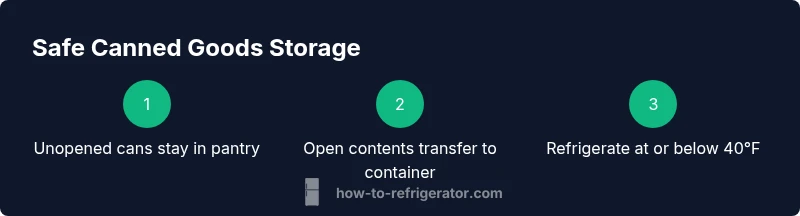
Unopened canned goods do not need refrigeration and should be stored in a cool, dry pantry. Refrigerating unopened cans can cause bulging or rust if temperature fluctuates and isn't necessary for shelf-stable foods. Once opened, transfer contents to a labeled, airtight container and refrigerate promptly, using within 3–4 days.
Why Storage Rules Matter
According to How To Refrigerator, safe storage isn't just about avoiding spoilage—it's about preserving flavor, texture, and nutrients while preventing foodborne illness. Canned goods are designed to be shelf-stable, but the environment still matters. Heat, light exposure, and humidity can affect the integrity of metal cans and the quality of contents. Unopened cans belong in a cool, dry pantry rather than the refrigerator. A steady, moderate temperature (ideally around 50–70°F) reduces the risk of rust, compromised seals, or accidental tasting by curious pets. By treating pantry storage as a default, you minimize unnecessary fridge usage and keep your kitchen organized. Remember: your fridge is for perishables and opened foods, not bulk shelf-stable items. If you manage canned stock well, you’ll waste less, save money, and enjoy consistent flavors across meals.
When to Refrigerate After Opening
Once you pop open a canned product, the clock starts. The moment you finish serving, or within minutes, transfer the remaining contents into a clean, airtight container with a tight seal. Store it in the main compartment of the refrigerator, not the door, where temperature fluctuates more. For most foods a safe window is roughly 3 to 4 days, though some items may last only 2 days. When in doubt, rely on smell, appearance, and texture rather than color alone. Label the container with the product name and date opened. This practice minimizes cross-contamination and helps you track safety without guessing. If you anticipate not finishing the can within a few days, consider freezing portioned leftovers to extend safety—the texture may change, but safety improves when refrigeration is not possible.
Common Myths About Refrigeration of Canned Goods
There are several misconceptions that lead homeowners to store canned goods incorrectly. Some assume unopened cans must be refrigerated; others believe refrigeration always extends shelf life. In reality, unopened cans are designed to thrive at room temperature in a cool, dry spot. Refrigeration is mainly for opened contents or items that have been prepared and canned with proper preservation in mind. Another myth is that washing or rinsing canned contents before storage improves safety; rinsing can introduce moisture and contamination. Always avoid dented or bulging cans, because compromised seams are a sign of possible botulism risk. Finally, many people think all flavors taste better after chilling; for some items the chill dulls flavors or changes texture—so taste before deciding to chill.
Practical Storage Guidelines by Food Type
Different canned foods have different optimal storage strategies. Soups, vegetables, and beans stored unopened should go in a pantry, away from heat sources and sunlight. After opening, most soups and sauces benefit from a sealed container in the fridge for up to 3–4 days. Tomato-based products can be more acidic and should be checked for color changes or off smells sooner. Fish and meats canned goods require extra caution—transfer to airtight containers and use quickly, as fats can go rancid faster. Always keep the fridge at or below 40°F (4°C) and avoid crowded shelves that hinder air circulation.
How to Prep and Transfer After Opening
Prepare a clean workspace, wash hands, and gather your containers. Open the can with a clean can opener or use the original lid if it provides a tight seal. Rinse the can rim to remove residue only if you plan to store the contents long-term; otherwise, skip rinsing to maintain the can's protective seal. Transfer contents to a labeled container with a tight lid. Seal well, place in the fridge, and note the opened date. Keep a small food thermometer handy to verify fridge temperature. This routine reduces the risk of bacterial growth and keeps flavors intact. Remember to wash the can and lid after pouring to keep surfaces sanitary.
Labeling and Rotation
Label every container with the product name and date opened. Use legible handwriting or a label maker to prevent confusion. Practice First-In, First-Out (FIFO): place newly opened items behind older stock so you use them first. Rotating stock reduces waste and helps you avoid spoiled leftovers. If you plan to freeze portions, use freezer-safe containers and note the freezing date. When you adopt consistent labeling and rotation, the kitchen becomes safer and more efficient.
What to Do If Cans Are Damaged or Bulging
Bulging or leaking cans are signs that the contents may be unsafe. Do not taste or attempt to open bulging cans; discard them promptly. Leaking cans should be disposed of in sealed bags to prevent drips and contamination. Clean the area where the can was stored and sanitize surfaces to avoid cross-contamination. If you ever suspect botulism risk, contact local health authorities. In general, replace damaged cans with new stock and adjust your storage approach to prevent recurrence—store cans away from heat and humidity to extend safety and quality.
Common Mistakes to Avoid
Avoid storing unopened cans in the refrigerator and exposing them to temperature fluctuations. Do not mix opened cans with other raw ingredients in the fridge; keep them in sealed containers. Do not store cans near strong odors or light sources, which can affect flavor. Lastly, never ignore spoilage signs; if you notice off-odors, unusual colors, or mold, discard safely and clean the area.
Authority Sources
For additional guidance, consult established food safety authorities. How To Refrigerator team draws on official guidelines to provide practical, home-friendly advice. See: FDA Safe Food Storage guidelines, USDA Food Safety and Inspection Service resources, and CDC food safety basics. How To Refrigerator Analysis, 2026. The How To Refrigerator team recommends applying these best practices to maintain safety and reduce waste in your kitchen. Sources: https://www.fda.gov/food/buying-selling-food/safe-food-storage, https://www.fsis.usda.gov/food-safety/safe-food-storage-and-preparation, https://www.cdc.gov/foodsafety/index.html
Tools & Materials
- Airtight containers (glass or BPA-free plastic)(For transferring opened contents; prevents contamination and odors)
- Permanent marker or label maker(Label with contents and date opened)
- Fridge thermometer(Ensures fridge stays at or below 40°F (4°C))
- Dish soap and sponge(For quick cleanup of spills)
- Paper towels(Keep workspace clean when transferring)
- Small resealable bags(Optional for portioning)
Steps
Estimated time: 15-25 minutes
- 1
Assess safety of opened contents
Inspect the opened can and its contents for signs of spoilage (off odors, unusual color, or slimy texture). If the can shows bulging, leaking, or a foul odor, do not taste or store—discard safely.
Tip: If anything looks or smells off, discard immediately rather than risking illness. - 2
Choose a storage container
Select a clean, airtight container appropriate for refrigeration; glass or BPA-free plastic is preferred. Do not leave contents in the can if you plan to refrigerate for more than a day.
Tip: Avoid metal containers that can react with acidic foods. - 3
Transfer contents to container
Use a clean utensil to move the contents from the can to the prepared container. Wipe the rim of the can before setting it aside to reduce drips and contamination.
Tip: If contents are thick, a funnel can help reduce spills. - 4
Label and date
Label the container with the product name and opened date. A discard date helps you plan meals and avoid waste.
Tip: Include the time window you expect to use the item to guide meal planning. - 5
Place in refrigerator
Store the container on an interior shelf where the temperature is stable. Ensure the fridge is at or below 40°F (4°C) and avoid crowding to maintain airflow.
Tip: Keep strong-smelling items separate to prevent odor transfer. - 6
Track and use within window
Check stored items daily and plan meals to use them within 3–4 days. If you won’t finish in time, consider freezing portions in freezer-safe containers.
Tip: Freezing is safer than refrigerating for long storage, but texture may change.
FAQ
Can I refrigerate unopened canned goods?
No, unopened canned goods are shelf-stable and belong in a cool pantry. Refrigeration is not required unless the product is intended to be stored cold after purchase.
Unopened cans don’t need the fridge; keep them in a cool pantry. Only refrigerate after opening.
How long can opened canned food stay in the fridge?
Typically 3 to 4 days, depending on contents. If there’s any doubt about spoilage, discard sooner rather than later.
Most opened canned foods last about three to four days in the fridge; when in doubt, throw it out.
Should I rinse canned foods before storing leftovers?
Rinsing is usually not necessary and can introduce moisture. If you do rinse, dry thoroughly before storing to prevent dilution of flavor and texture changes.
Rinsing isn’t usually needed; if you rinse, dry well before storing.
Is it safe to freeze opened canned foods?
Yes, you can freeze leftovers in portions. Texture may change after thawing, but freezing can improve safety if you won’t finish them promptly.
Yes, you can freeze leftovers in portions; expect some texture changes upon thawing.
What about dented or bulging cans?
Dented or bulging cans should be discarded. They can indicate compromised seals and potential bacterial growth.
Discard dented or bulging cans—safety first.
Do I need to wash cans before opening?
Washing before opening isn’t necessary. Wash hands before handling, and clean the can rim after pouring if you’re transferring to a container.
No need to wash before opening; wash hands and clean the rim if needed.
Watch Video
Top Takeaways
- Unopened cans stay in the pantry.
- After opening, refrigerate promptly in airtight containers.
- Label and date every opened container.
- Keep the fridge at or below 40°F (4°C) and use within 3–4 days.
- Discard damaged or bulging cans immediately.