How Much Energy Does a Mini Refrigerator Use: A Practical Guide
Discover how much energy a mini refrigerator uses, what factors affect consumption, and proven strategies to cut energy. Expert guidance from How To Refrigerator helps homeowners compare models and save on bills.


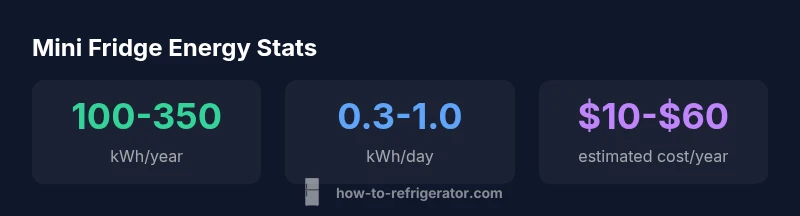
On average, compact mini refrigerators use about 100-350 kWh per year, roughly 0.3-1.0 kWh per day. The exact figure depends on size, insulation quality, compressor type, door openings, and whether it runs in a hot environment or as a secondary unit. Checking the energy label helps you compare models accurately.
How much energy does a mini refrigerator use
Understanding how much energy does a mini refrigerator use is essential for budgeting and reducing household energy waste. On average, compact models consume about 100-350 kWh per year, which translates to roughly 0.3-1.0 kWh per day. The exact figure depends on size, insulation quality, compressor type, door openness, and whether the unit sits in a hot room or a sunny location. According to How To Refrigerator, energy labels and real-world usage can vary, so use them as a starting point rather than a guarantee. If you’re evaluating a unit for a dorm, office, or basement kitchenette, tracking these numbers helps you compare models more effectively.
What drives energy use in compact fridges
Energy use in compact fridges hinges on several interacting factors. Size matters: larger mini fridges generally require more power, but efficiency can offset that cost if insulation is strong and the compressor is efficient. Insulation quality and door seals determine how much cold air leaks out when the door opens. The presence of an integrated freezer, the type of defrost system (manual vs automatic), and how often the door is opened also influence energy consumption. Finally, ambient temperature and placement (direct sunlight, near a heat-producing appliance, or in a hot garage) can push the compressor to work harder. For homeowners, closest energy-use comparisons come from the energy label and the unit’s wattage and expected annual kWh, which How To Refrigerator recommends using as a baseline.
How energy is measured and labeled
Modern mini fridges are evaluated using standardized metrics such as kWh/year on Energy Guide labels and, for many models, Energy Star ratings. These labels summarize typical annual consumption and help consumers compare very different sizes and configurations at a glance. In practice, the labeled figure represents a model’s estimated yearly electricity use under standard testing conditions. Real-world usage may be higher or lower depending on climate, installation, and user habits. How To Refrigerator analysis highlights that comparing labels across models provides the most reliable view of long-term energy consumption.
Typical energy ranges by size and type
Mini refrigerators come in a few common size bands, and energy use generally scales with capacity, though efficiency matters. Typical ranges (kWh/year) across common sizes include:
- 0.3-1.0 cu ft: 100-150 kWh/year
- 1.0-2.0 cu ft: 150-250 kWh/year
- 2.0-4.0 cu ft: 200-350 kWh/year
These ranges are approximate and depend on insulation, door seals, and whether you have a separate freezer compartment. When you shop, look for the model’s energy use on the Energy Guide label rather than relying on size alone.
How to estimate yearly energy consumption for your unit
If a model lists wattage (W) and running hours per day, you can estimate annual energy use with a simple calculation: kWh/year = (W × hours per day × 365) / 1000. If the label provides kWh/year directly, use that figure for the most accurate estimate. For models without precise numbers, compare multiple similar units and apply the mid-range from your shortlist. Always adjust for your climate and typical usage patterns, such as frequent door openings in hot weather or if the fridge sits in a kitchen that’s not well-ventilated.
Practical tips to reduce energy use
Small changes add up. Place the fridge away from heat sources like ovens or direct sunlight, ensure the door seals are clean and intact, and avoid leaving the door open longer than necessary. Set the thermostat within a recommended range (generally around 37-40°F / 3-4°C for the fridge and 0°F / -18°C for any freezer), and keep the interior organized to avoid excessive door openings. Regular defrosting (if the unit is not frost-free) helps maintain efficiency by preventing frost buildup that increases energy draw. Use LED interior lighting and keep coils clean to maximize heat exchange efficiency.
Choosing an energy-efficient mini fridge
When selecting a model, prioritize energy efficiency alongside size and features. Look for a clear Energy Guide label with a low annual kWh figure, and consider models with good insulation, tight door seals, and a more efficient compressor. If you’re in a place with extreme temperatures, check how well the unit tolerates hot or cold environments. Energy Star-certified mini fridges tend to offer better efficiency, but always compare specific models rather than relying on certification alone. How To Refrigerator recommends reading the label, verifying the annual energy use, and validating performance through user reviews and independent testing where available.
Real-world scenarios: dorms, kitchens, and garages
In dorm rooms, compact fridges save space and energy with smaller capacity, yet user behavior matters—short, cold cycles and tight door seals help. In kitchen islands, efficiency depends on how often the door opens and where it’s placed relative to other appliances. In garages or unconditioned spaces, energy use rises with ambient temperatures, so choose models specified for non-climate-controlled environments if you anticipate heat exposure. Modeling your situation with label data and manufacturer specs can give you a realistic expectation of energy costs and performance.
Common myths about energy use
A common myth is that all mini fridges consume little energy, which can be true in some cases but not universally. Another misconception is that larger units are always more efficient; modern designs can deliver high efficiency even at larger capacities. Finally, many assume energy use is constant; in reality, compressors cycle on and off, so energy use varies with temperature, door activity, and ambient heat. By understanding the labeled kWh/year and how your habits modify actual consumption, you can make smarter choices.
Estimated energy use by common mini fridge sizes
| Size (cu ft) | Typical energy use (kWh/year) | Notes |
|---|---|---|
| 0.3-1.0 | 100-150 | Smallest models; often used as minibar alternatives |
| 1.0-2.0 | 150-250 | Common in dorm rooms or kitchen islands |
| 2.0-4.0 | 200-350 | Under-counter or apartment setups with more capacity |
FAQ
Do mini fridges use a lot of energy?
Mini fridges vary widely in energy use, but most fall in the 100-350 kWh/year range depending on size and efficiency. Your actual consumption will depend on placement, door usage, and internal temperature settings. Checking the Energy Guide label provides a reliable comparison across models.
Mini fridges can vary, but you can compare models by checking their energy labels and keeping temperatures moderate to lower energy use.
What size counts as a mini fridge?
A mini fridge typically ranges from about 0.3 to 4.0 cubic feet. Beyond that, it becomes a compact refrigerator rather than a traditional mini unit. Choose based on both capacity needs and energy efficiency labeled on the model.
If you need a small, energy-efficient unit, aim for one labeled small to midsize in the 0.3 to 2.0 cubic feet range.
Are all mini fridges energy-efficient?
Not all mini fridges are created equal. Look for models with low annual kWh figures and passive features like good insulation and tight door seals. Energy Star certification can help, but always verify the specific model’s energy use.
Not every mini fridge is equally efficient—check the energy label and, if possible, pick an Energy Star model.
Can I reduce energy use by adjusting settings?
Yes. Set the fridge to about 37-40°F (3-4°C) and keep the freezer around 0°F (-18°C) if you have one. Avoid excessive door openings and ensure coils and gaskets stay clean. Small changes in usage can yield noticeable energy savings.
Yes—keep temperatures in the recommended range and minimize door openings to save energy.
Does location affect energy use?
Absolutely. Heat sources, sunlight, and poor ventilation raise the compressor load, increasing energy use. In garages or sunny kitchens, choose units rated for warmer environments and consider adding spacing for proper airflow.
Yes—place away from heat and ensure good airflow; energy use climbs in hot spaces.
Is replacing an old mini fridge worth it for energy savings?
Upgrading can pay off if an older unit is inefficient and used heavily. Compare the old unit’s energy use with modern models’ labels. In many cases, a newer, more efficient model reduces energy use enough to justify the purchase.
Sometimes a newer unit pays for itself through lower energy use; compare labels to decide.
“"Understanding energy use isn't just about watts—it's about how you actually use the fridge in daily life. Small design choices and user habits together determine total cost."”
Top Takeaways
- Estimate energy by model label and your usage pattern
- Choose models with low kWh/year and tight seals
- Place fridge away from heat and minimize door openings
- Set temperatures within recommended ranges to reduce waste
- Regular maintenance boosts efficiency and longevity