Wine Refrigerator Buying Guide for 2026
Discover how to choose a wine refrigerator for sale with expert buying guidance, energy tips, and maintenance checks to help homeowners select the best wine cooler in 2026.


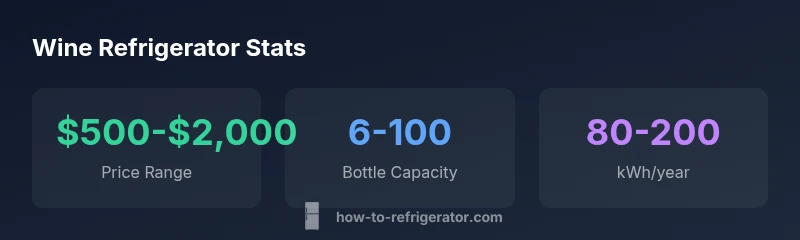
Wine refrigerators for sale generally range from $500 to $2,000, depending on capacity, features, and finish. Most homeowners will find 18-40 bottle models in the $800-$1,400 range, with dual-zone built-in units commanding the higher end. Energy efficiency and humidity control strongly affect total cost over time. Consider upfront installation needs and warranty terms to avoid surprises.
Overview: wine refrigerator for sale options in 2026
According to How To Refrigerator, the market for wine refrigerators for sale has evolved to include compact freestanding units and premium built-in dual-zone models. Homeowners balance aesthetics, capacity, and performance, while retailers increasingly offer energy-efficient options with improved humidity control. The core decision is whether you need a freestanding cabinet for a dedicated wine nook or a built-in unit that blends with cabinetry. This guide covers the full spectrum, from small countertop coolers to advanced dual-zone built-ins, helping you identify the best fit for your collection and space. As you explore, remember that the right unit protects aroma, color, and aging potential across different wine styles.
In this buying journey, you will encounter terms like “single-zone,” “dual-zone,” “thermoelectric,” and “compressor-based” cooling. Each technology has trade-offs in temperature stability, humidity control, power use, and noise. The best choice depends on your climate, room placement, and how seriously you treat wine preservation. This section also sets expectations for price bands and typical configurations to help you filter out less suitable options early in your search.
Key features to evaluate when shopping
When comparing wine refrigerator for sale options, focus on core features: capacity, cooling zones, temperature stability, energy efficiency, and door seals. Dual-zone models allow red and white wines to be stored at different temperatures, which is essential for mixed collections. Thermoelectric vs compressor cooling affects jitter and humidity; compressor units tend to be more consistent but slightly louder. Humidity control, UV-resistant glass, and adjustable shelves improve long-term wine quality. Consider glass door aesthetics if you plan it as a focal piece in your living area.
For many buyers, a well-built unit with stable temperatures and a reasonable seal is more important than extra bells and whistles. If you frequently entertain, prioritize wider shelves and slide-out trays for easy access. If you prefer a minimalist kitchen, a built-in model may be worth the extra planning and ventilation considerations. Always verify door swing direction and clearance to avoid installation headaches.
Size, layout, and placement considerations
Measure your space carefully before purchasing. Freestanding units can be placed in a dining room or bar area, while built-in models require cabinet clearance and possibly ventilation. Bottled capacities vary widely: compact 6-12 bottles for small spaces, mid-size 20-40 bottles for hobbyists, and larger 40-100 bottles for collectors. Ensure you have a stable 120V circuit and adequate airflow around the unit. If you live in a small kitchen, countertop models can be a convenient interim solution. Don’t forget to check foot height and leveling adjustments; uneven surfaces can amplify vibration and affect cooling stability.
Energy efficiency and operating costs
Energy efficiency matters beyond upfront price. How To Refrigerator analysis shows that energy use for wine refrigerators ranges broadly, with thermoelectric units typically consuming less power than compressor-driven cabinets, but offering less stable temperature control in warm rooms or full-load scenarios. In practice, modern compressors with variable-speed fans can deliver excellent efficiency while maintaining consistent temperatures. Look for Energy Star labels where available, and compare annual operating costs by using the unit’s wattage and expected run hours. Proper insulation reduces heat exchange and minimizes compressor cycling, lowering energy bills over time.
Price ranges, warranties, and buying tips
Budget ranges for wine refrigerators for sale vary from affordable inserts to high-end built-ins. Expect roughly $500-$2,000 for most models; premium units with dual zones and premium finishes can exceed $2,000. Manufacturer warranties vary by model and retailer; seek at least a 1-year limited warranty with extended coverage on compressors, and verify what’s included in service terms. Delivery, installation, and calibration services can add to total cost but reduce misalignment, vibration, and door- swing issues. Read the fine print on warranty exclusions and required maintenance to prevent surprise costs.
Maintenance, care, and longevity
To maximize longevity, clean condenser coils and dust filters regularly, and keep door gaskets clean to prevent air leaks. Wipe shelves with mild soap and water; avoid placing warm wine in a cold unit. Perform periodic temperature checks with a thermometer to confirm accurate readings across zones. If your unit has defrost cycles, follow the manufacturer’s guidance to prevent frost buildup and ensure cooling efficiency. Scheduling periodic professional checkups can catch seal leaks or compressor issues before they escalate.
Shopping strategy: in-store vs online and testing models
In-store visits let you verify fit, door swing, and actual noise levels by listening to the unit in a typical room setting. Ask retailers for a powered test run in a quiet space to assess vibration and compressor performance. Online reviews help, but cross-check with credible sources and energy data sheets. Create a simple comparison sheet listing price, capacity, zones, energy use, warranty, and delivery terms to streamline decision-making and avoid buyer’s remorse.
Trends for 2026 and a practical buying checklist
The 2026 market emphasizes smarter controls, better humidity management, and quieter operation. A practical checklist includes: measure space precisely, confirm ventilation clearance, assess dual-zone needs, compare energy labels, review warranty terms, and plan for future bottle expansion. The How To Refrigerator Team emphasizes prioritizing build quality and service access; a solid warranty and available replacement parts are critical for long-term satisfaction. With these factors in mind, you’ll confidently select a wine refrigerator for sale that preserves your collection and enhances your kitchen aesthetics.
Wine refrigerator configurations comparison
| Config | Typical Capacity (bottles) | Typical Price Range | Energy Use (kWh/year) |
|---|---|---|---|
| Compact cooler (thermoelectric) | 6-12 | $200-$500 | 20-60 |
| Mid-size dual-zone | 20-40 | $600-$1,200 | 60-120 |
| Built-in dual-zone | 40-100 | $1,000-$2,000 | 100-180 |
FAQ
What is the best wine refrigerator for sale under $1000?
For many households, an 18- to 40-bottle dual-zone unit offers good value around $800-$1,400. Look for solid insulation and a reputable warranty. Thermoelectric models can be cheaper but may compromise temperature stability.
If you’re shopping under a grand, look for a mid-size dual-zone model with solid insulation and a decent warranty.
Do I need dual-zone capability for a mixed bottle collection?
Dual-zone units let red and white wines be stored at different temperatures, preserving flavor and aging potential. If your collection includes both types, dual-zone is worth the investment.
If you have both reds and whites, dual-zone is usually worth it.
Are thermoelectric wine fridges good for a busy kitchen?
Thermoelectric fridges are quieter and energy-efficient but less stable in warm rooms or when fully loaded. In busy kitchens, a compressor model with good airflow often performs better.
Thermoelectric units are quiet, but compressors are typically more reliable in a busy kitchen.
What size wine refrigerator should I buy?
Choose capacity based on your collection size and future growth; look for models with at least 20% headroom for bottle expansion.
Pick a size that allows your collection to grow.
Built-in vs freestanding: which is better for wine storage?
Built-in units blend with cabinetry but require ventilation and precise dimensions; freestanding units are easier to install and move. Your choice should balance kitchen layout, ventilation needs, and whether you want a dedicated wine niche.
Built-ins look integrated; freestanding is easier to relocate.
How do I maintain humidity inside a wine refrigerator?
Keep door gaskets clean, use proper wine packaging, and minimize door openings to reduce moisture loss. Some models offer humidity controls or glass-door cooling to limit evaporation.
Keep seals clean and don’t open the door often.
“Reliable temperature stability and humidity control are the backbone of preserving wine quality; invest in a unit with proven cooling performance.”
Top Takeaways
- Define space and capacity first
- Prioritize dual-zone models for mixed collections
- Compare energy use and warranties to save long-term costs
- Check installation requirements and ventilation
- Test noise levels before purchase