Wine Enthusiast's Guide to the Right Wine Fridge
Learn how to choose, configure, and care for a wine enthusiast wine fridge. This How To Refrigerator guide covers temperature, humidity, rack layouts, placement, and upkeep to protect aging vintages.


For wine enthusiasts, a dedicated wine fridge is essential to protect aroma, flavor, and aging potential. You’ll learn how to select the right size, set ideal temperature and humidity levels, and organize racks to safeguard vintages. According to How To Refrigerator, a purpose-built unit minimizes temperature swings, reduces light exposure, and lowers vibration—key factors for a collection that ages gracefully.
Why a dedicated wine fridge matters for enthusiasts
For serious collectors, a suitable wine fridge isn’t a luxury—it’s a storage partner that helps preserve aroma, flavor, and aging potential. Temperature stability matters because even small swings can subtly alter character, while controlled humidity reduces cork shrinkage and oxidation risk. Light exposure and vibration also influence long-term quality. The How To Refrigerator team notes that a purpose-built wine fridge keeps bottles at a consistent state compared with standard kitchen refrigerators. This reduces unnecessary stress on labels, corks, and seals, and it supports both aging-focused cellars and practical, everyday access for tastings. By isolating your collection from heat sources like dishwashers and ovens, you minimize accelerated aging on delicate whites and fragile sediment in reds. If you’re expanding from a few bottles to a dedicated rack, a wine fridge becomes a reliable climate buffer that protects your investments and taste preferences over decades, not months.
Why a dedicated wine fridge matters for enthusiasts
For serious collectors, a suitable wine fridge isn’t a luxury—it’s a storage partner that helps preserve aroma, flavor, and aging potential. Temperature stability matters because even small swings can subtly alter character, while controlled humidity reduces cork shrinkage and oxidation risk. Light exposure and vibration also influence long-term quality. The How To Refrigerator team notes that a purpose-built wine fridge keeps bottles at a consistent state compared with standard kitchen refrigerators. This reduces unnecessary stress on labels, corks, and seals, and it supports both aging-focused cellars and practical, everyday access for tastings. By isolating your collection from heat sources like dishwashers and ovens, you minimize accelerated aging on delicate whites and fragile sediment in reds. If you’re expanding from a few bottles to a dedicated rack, a wine fridge becomes a reliable climate buffer that protects your investments and taste preferences over decades, not months.
Tools & Materials
- Screwdriver set(Phillips and flat-head sizes for securing shelving and mounting brackets)
- Digital thermometer and hygrometer(Two probes recommended for separate zones or at least one near the bottles)
- Mild soap or bottle-safe cleaner(Avoid ammonia-based cleaners; use neutral pH cleaning solution)
- Soft microfiber cloth(For gentle cleaning and glass surfaces)
- Level(Ensure fridge sits evenly to prevent door misalignment)
- Silicone lubricant for seals(Refresh door gaskets if they feel stiff or crack)
- Power strip with surge protection(Protects a dedicated unit from surges without daisy-chaining appliances)
Steps
Estimated time: 3-6 hours
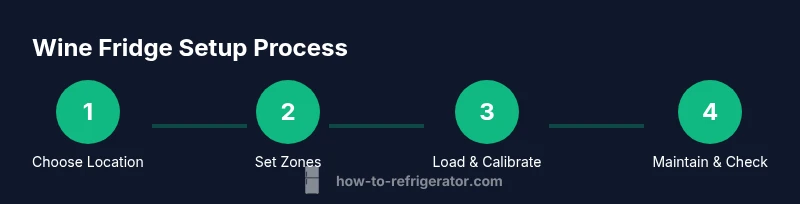
- 1
Choose location and footprint
Select a cool, stable space away from heat sources and direct sunlight. Measure the floor area and ensure ventilation clearance as specified by the manufacturer. A dedicated wine fridge benefits from a flat, level surface to avoid door misalignment and vibration.
Tip: Use a stud finder to mount anti-tip brackets if needed and place the unit with at least 4 inches of ventilation clearance on the back and sides. - 2
Select the right unit and verify specs
Compare single-zone versus dual-zone models based on your collection. Check the temperature range, humidity control features, door type (glass vs solid), and energy efficiency. Ensure shelving is adjustable to accommodate different bottle shapes.
Tip: Prefer models with a separate thermometer readout for each zone and a reversible door option for flexible placement. - 3
Prepare space and pre-clean
Wipe the area, install any shelving or brackets, and verify door seals are intact. Remove protective packaging only after the unit is in place. Do a quick interior wipe before loading wines.
Tip: Do not install near outlets that could generate heat or cause door heat buildup during operation. - 4
Move in, level, and power up
Carefully slide the fridge into position and use a level to verify it sits evenly. Plug into a dedicated outlet and power on. Allow the unit to stabilize for several hours before loading bottles.
Tip: Avoid using the fridge while it’s still stabilizing; this helps prevent unnecessary compressor cycling. - 5
Set initial temperatures and zones
Program temperatures to align with your wine types: reds in a slightly warmer zone, whites in a cooler one. If the model has humidity controls, set a moderate level to protect cork integrity without promoting mold.
Tip: Record your target temperatures and check after 24 hours with the built-in or external thermometer. - 6
Load and organize bottles
Place curvy or fragile bottles on adjustable racks; keep the largest bottles on lower shelves. Create sections by wine type, vintage, or consumption timeline. Leave space for air circulation around each bottle.
Tip: Keep frequently accessed bottles toward the front for easy rotation during tastings. - 7
Calibrate humidity and airflow
If your unit supports humidity control, monitor and adjust to maintain cork integrity. Avoid overfilling shelves which can restrict airflow and cause temperature stratification.
Tip: Use a hygrometer placed in the bottle zone to verify humidity remains within a comfortable range. - 8
Set maintenance reminders
Schedule quarterly cleaning of shelves and door gaskets, and inspect seals for wear. Replace worn gaskets promptly to preserve efficiency and cooling performance.
Tip: Keep a simple log of cleaning dates and any gasket observations. - 9
Review performance after loading
Check temperature stability over 24–72 hours across zones. Confirm humidity remains steady, and note any unusual noise or vibration. Adjust shelving and airflow if needed.
Tip: If you notice persistent fluctuations, verify door alignment and consider relocating away from heat sources.
FAQ
What is the ideal temperature for wine storage?
Most collectors aim for a stable temperature in a narrow range to preserve flavor and aging potential. Consistency matters more than chasing a perfect single number, and dual-zone fridges let you tailor temps for different wines.
Aim for stable temperatures with minimal variation; use zones if you have both reds and whites to keep wines in the optimal range for each type.
Should I get a dual-zone wine fridge?
Dual-zone models offer separate temperatures for reds and whites, which many enthusiasts prefer for aging vs. daily service. If your collection includes both varietals, a dual-zone fridge can simplify management.
If you keep both red and white wines for aging, a dual-zone unit is usually worth it.
Is a built-in wine fridge better than a freestanding one?
Built-in units provide integrated aesthetics and often better airflow in custom cabinetry, but they require proper ventilation. Freestanding units are easier to install and move, with similar temperature control in most mid-range models.
Built-in looks sleek and saves space, but you need ventilation; freestanding is more flexible and portable.
How do I maintain humidity in a wine fridge?
Humidity helps corks seal and slow oxidation. Use models with built-in humidity control or place the unit in a room with stable conditions. If humidity drops, corks may dry out, increasing leakage risk.
Keep humidity steady to protect corks; use a model with humidity control where possible.
Can a wine fridge double as a regular fridge?
Wine fridges are optimized for stability and humidity, not for high-volume daily refrigeration. Avoid using a dedicated unit as a general-purpose fridge, as frequent door openings can disrupt its climate.
It’s best to reserve a wine fridge for wine, not as a catch-all fridge.
How often should I clean the seals and shelves?
Clean seals every 6–12 months and wipe shelves during routine maintenance. Dirty seals can reduce efficiency and cause temperature drift.
Clean gaskets a couple times a year and wipe shelves when you do a general clean.
Watch Video
Top Takeaways
- Choose a wine fridge that matches your collection size and growth plan.
- Prioritize stable temperature, controlled humidity, and low light exposure.
- Organize shelves for easy rotation and proper air circulation.
- Position the unit away from heat sources and ensure level mounting.
- Schedule regular maintenance to protect quality and longevity.