Which Refrigerator to Buy: The 2026 Buying Guide
Learn how to choose the right refrigerator with a data-driven buying framework. Compare styles, sizes, energy use, features, and budget to pick the best fridge for your home.


When choosing which refrigerator to buy, start with your kitchen space, family needs, and budget. A data-driven framework helps you compare styles, capacities, energy use, and features to pick the best fridge for your home. Read on for a detailed, objective side-by-side guide.
Which Refrigerator to Buy: A Practical Framework\n\nChoosing which refrigerator to buy starts with mapping your kitchen space, family needs, and budget. The goal is to compare apples to apples across styles, sizes, energy use, and features so you can pick a fridge that actually fits your life. According to How To Refrigerator, a structured framework saves time and reduces buyer's remorse by clarifying what matters most in your home. Begin with three questions: What will you store most? How much space can you dedicate? And what is your tolerance for upfront cost versus long-term operating costs? Answering these questions sets the foundation for a rational, evidence-based decision rather than an impulse buy. In this guide we’ll move from broad style choices to concrete evaluation criteria, so you can confidently answer the question of which refrigerator to buy for your kitchen and family.
\n
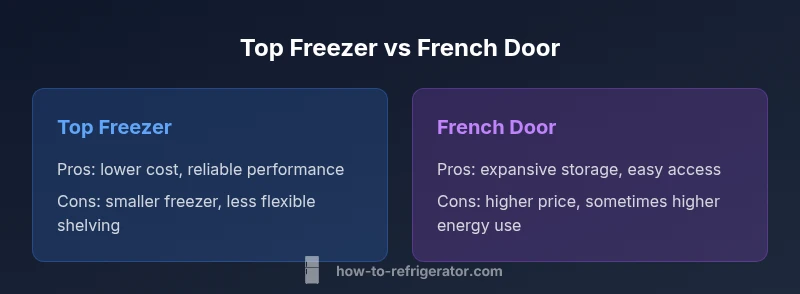
Styles and Layout: Top Freezer, Bottom Freezer, Side-by-Side, French Door\n\nRefrigerators come in several primary layouts, each with trade-offs for capacity, access, and price. Top Freezer models tend to be the most affordable and energy-efficient; they offer straightforward organization and familiar controls. Bottom Freezer designs shift the largest cooling area to the bottom, which many users find convenient for daily use. Side-by-Side units provide easy access to fresh and frozen sections but can be narrower for wide containers. French Door models place the widest shelves at eye level, enabling flexible storage for large platters and frequent entertaining but usually cost more and may use more energy. Compact mini-fridges fit kitchens with limited space or as secondary units. When evaluating layouts, consider your cooking style, grocery habits, and whether you frequently store tall or wide items. The How To Refrigerator team suggests listing your top 5 daily items to estimate required shelf width and door clearance, then mapping those needs to the available floor space.
\n
Measuring Your Space: How to Fit a Fridge in Your Kitchen\n\nAccurate measurements ensure a refrigerator fits without blocking traffic or cabinets. Start with the footprint: measure width, depth, and height of the intended space, noting any trim or panel constraints. Add at least 1 inch of clearance on the sides and rear for ventilation. Check door swing: ensure doors won’t hit counters, appliances, or walls when opened to full 90- to 180-degree angles. Consider adjacent cabinets and countertop overhangs; if your space is tight, measure twice and use a tape measure, not a rough estimate. Also verify that any existing ice maker or water line can be rerouted if needed. Finally, factor in accessibility: the fridge should be easy to reach from the primary food prep zone and at a comfortable standing height for household members of varying heights.
\n
Energy Efficiency and Running Costs\n\nEnergy efficiency matters more over time than initial price, because electricity costs accumulate. Look for an ENERGY STAR rating and compare annual energy consumption labeled on product specifications. Remember that stated energy use depends on door openings, ambient temperature, and how full the fridge is. How To Refrigerator Analysis, 2026, finds that model families with inverter compressors and well-sealed doors typically deliver lower running costs and less temperature fluctuation. In practice, a fridge with stronger insulation and a modern compressor can save money in households that keep groceries refrigerated longer, especially during peak usage hours. If you live in a hot climate or run groceries often, prioritize efficiency without sacrificing durability. Energy-Saving tips: keep doors closed, organize to minimize openings, and avoid overfilling to prevent cold air from escaping.
\n
Feature Priorities by Household\n\nDifferent households prioritize different features. Families with children often value flexible shelves, wider door bins, and reliable ice options. Busy professionals may prefer smart controls that allow remote checks and quick temperature adjustments. For those who host gatherings, a large freezer capacity and wide shelves help with bulk storage. If you cook daily, consider models with stability-friendly drawers and humidity-controlled crisper bins. In all cases, avoid overpaying for features you won't use. Create a short list of must-haves and nice-to-haves, then map them to the price tiers you’re comfortable with. The How To Refrigerator approach is to benchmark features against daily routines, not marketing claims, to reduce buyer regret and ensure you get the best value for the space you have.
\n
Price Bands and Total Cost of Ownership\n\nRefrigerator prices span a wide range, driven by size, layout, finish, and additional features. In general, you’ll find budget models that cover essential cooling and organization, mid-range units with better energy efficiency and flexible shelving, and premium designs with advanced features and larger capacities. When evaluating price, consider total cost of ownership: upfront price plus projected energy costs, maintenance, and potential repair costs over the appliance’s lifespan. A mid-range model with durable components often offers the best balance of reliability and value. If your kitchen is small, or you’re renovating on a tight budget, the price band you choose should align with space and usage expectations; but don't sacrifice critical performance to save a few hundred dollars upfront. The goal is a fridge you won’t replace prematurely and that reduces waste and trips to the store.
\n
Brand Reliability, Warranties, and After-Sales Service\n\nBrand reliability matters for long-term satisfaction. Look for manufacturers with a strong service network and parts availability in your region. Compare warranty terms for compressor, sealed system, and labor coverage, as these often determine post-purchase costs. Read customer reviews for consistency in cooling performance and door seals. A reputable dealer will explain maintenance intervals, such as filter replacements and door gasket checks. If you rely on a water dispenser or ice maker, confirm the availability of replacement water filters and service support. The How To Refrigerator team emphasizes balancing price with service quality, because a nice fridge loses its value if it’s difficult to service or parts are scarce in your area.
\n
A Step-by-Step Buying Process\n\n1) Clarify needs with a short list of must-haves and space measurements. 2) Narrow down by layout and size to fit your kitchen. 3) Compare energy ratings and annual operating costs. 4) Check warranty coverage and service availability. 5) Review delivery and installation requirements, including electrical and plumbing connections. 6) Read user reviews for reliability and fit in real homes. 7) Test the model in-store when possible and request a demonstration of key features. Following these steps reduces buyer’s remorse and helps you select a refrigerator that truly matches your daily routine and budget.
\n
Common Pitfalls and How to Avoid Them\n\nAvoid buying purely on appearance or marketing hype; visuals do not guarantee performance. Beware models with a large price tag but modest energy efficiency gains. Don’t overlook door clearance and depth measurements—many kitchens fail a safe fit. Don’t assume a higher capacity equals better storage if the internal layout is awkward. Finally, skip impulse purchases during promotions; compare total cost over 5-10 years and verify that the model you choose aligns with your family’s routines and cleaning habits.
\n
Quick Decision Framework\n\nIf space is your priority, measure carefully and compare compact or narrow-width models. If you value flexibility and entertaining, a French Door or Side-by-Side may deliver the best balance between access and capacity. For budget-conscious buyers, a Top Freezer with strong energy efficiency offers reliable performance at a lower upfront cost. Use the checklist below to decide: 1) space fit, 2) energy costs, 3) feature relevance, 4) price and warranty. With these criteria, you’ll land on a refrigerator that suits your home and lifestyle while keeping costs predictable over time.
Feature Comparison
| Feature | Top Freezer | Bottom Freezer | Side-by-Side | French Door | Compact Mini |
|---|---|---|---|---|---|
| Typical capacity range (cu ft) | 18-25 | 18-25 | 22-28 | 20-28 | 3-7 |
| Energy efficiency (tiers) | Good | Excellent | Varies | Excellent | Moderate |
| Price range | $600-900 | $800-1500 | $1200-1800 | $1400-2800 | $400-800 |
| Best for | Budget kitchens or narrow spaces | Families needing freezer access | Shared access and quick refills | Large families or entertaining | Studio apartments or single rooms |
Strengths
- Wide range of styles to fit different kitchens and budgets
- Modern models offer better energy efficiency and storage flexibility
- Strong service networks and warranty options in many regions
- Easier access to freshly stored items with flexible shelving in many layouts
Cons
- Higher upfront costs for premium energy-efficient models
- Per-feature value can be overrated if not aligned with needs
- Some layouts have limited door clearance for tall items
French Door refrigerators offer the best balance of space, efficiency, and everyday practicality for most families
For everyday use with entertaining and flexible storage, choose a French Door model. If budget or space is severely limited, a Top Freezer remains a solid, reliable alternative. Assess space, energy use, and must-have features before buying.
FAQ
What is the best refrigerator for a small kitchen?
In small spaces, look for compact widths or 24-inch models that fit your footprint without sacrificing essential cooling. Prioritize energy efficiency and a layout with flexible shelves to maximize usable space. Consider a Top Freezer or a Compact Mini if you truly need to maximize width.
For small kitchens, choose a compact or narrow model with good energy efficiency. A Top Freezer often fits best in tight spaces.
Should I prioritize energy efficiency over features?
Energy efficiency reduces operating costs over time and often accompanies better overall durability. Features should align with your needs; avoid paying for gimmicks you won't use. Balance energy savings with practical functionality.
Energy efficiency saves money long-term; pick features that actually improve daily use.
Is a top freezer better than a bottom freezer?
Top freezers are typically cheaper and very reliable, with straightforward organization. Bottom freezers offer easier access to fresh items and longer-term storage planning. Your choice depends on how frequently you access frozen foods and your budget.
Top freezers are affordable and reliable; bottom freezers make daily access easier.
Do I need a water dispenser or ice maker?
Dispenser and ice maker add convenience but can increase maintenance and upfront cost. If you use ice or filtered water often, these features are worth considering; otherwise they may be optional frills.
If you regularly use ice or filtered water, a dispenser helps; otherwise you can skip it.
What size refrigerator do I need?
Choose a size that matches your household's weekly groceries and cooking habits. A family of four typically needs a larger capacity than a single person, but layout and space constraints may limit your options. Always measure before buying.
Size depends on groceries and space; measure and compare.
How long do refrigerators typically last?
Most refrigerators last many years with regular maintenance, but lifespan varies by brand, usage, and climate. Look for models with robust compressors and accessible replacement parts. Regular cleaning and door seal maintenance extend performance.
Most fridges last many years with proper care and a good compressor.
Top Takeaways
- Measure space before shopping
- Prioritize energy efficiency to reduce costs
- Match layout to daily routines
- Balance price with warranty and service
- Read reviews for real-world performance