What Type of Refrigerator Is Needed for Vaccines: A Practical Guide
Learn the essential refrigerator type for vaccine storage, including temperature ranges, features, and a practical buying checklist for clinics and homes. How To Refrigerator provides expert guidance on choosing medical-grade storage that preserves potency and ensures compliance.


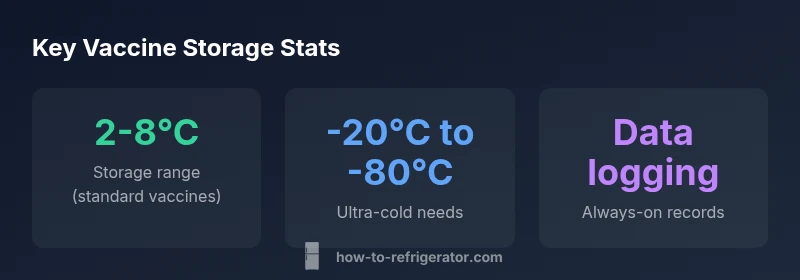
Most vaccines require a dedicated medical-grade refrigerator that maintains a precise 2-8°C range for standard vaccines; some vaccines and storage plans use ultra-low temperatures (-20°C to -80°C). In practice, select a purpose-built vaccine storage refrigerator with continuous temperature monitoring, automatic data logging, and alarms, rather than a general household fridge. This setup minimizes temperature excursions and protects vaccine potency.
What type of refrigerator is needed for vaccines
Vaccines rely on precise, consistent storage to preserve potency. For most vaccines used in clinics, a medical-grade refrigerator that maintains a strict 2-8°C range is essential. Some vaccines and storage scenarios do call for ultra-low temperatures, typically in specialty settings, with storage at -20°C to -80°C. The core question is not whether you store vaccines, but how reliably the storage unit maintains temperature and how well it records data. According to How To Refrigerator, investing in a purpose-built vaccine storage refrigerator is the most reliable choice for preserving vaccine integrity and ensuring regulatory compliance. The right unit reduces the risk of excursions caused by door openings, power fluctuations, or improper placement.
Beyond temperature, consider capacity, interior layout, and ease of cleaning. A unit designed for healthcare environments will feature sealed gaskets, removable shelves that are easy to sanitize, and smooth interiors that resist microbial growth. In many clinics, the storage solution also functions as a centralized data point for temperature logs and alarm events, making ongoing record-keeping straightforward.
Core features that matter for vaccine storage refrigerators
A vaccine-focused refrigerator should deliver more than passive cooling. Essential features include: precise temperature control with tight uniformity across the chamber, calibrated sensors placed away from doors or vents, insulated doors with reliable seals, and interior shelving that can be sanitized easily. Critical extras include audible and visual alarms for temperature excursions, data logging with time stamps, remote monitoring compatibility, and an automatic power backup or generator-friendly design. Look for certifications or endorsements from public health authorities, and ensure the unit can be integrated into your facility’s existing inventory and record-keeping systems. Strong maintenance plans, routine defrost and door seal checks, and a clear service history help prevent downtime when vaccine storage is most critical.
Temperature control, monitoring, and compliance basics
Reliable vaccine storage hinges on robust temperature control and thorough monitoring. This means having dual sensors to verify uniformity, a digital temperature controller with an accuracy of at least 0.5°C, and a calibrated thermometer as a secondary reference. Continuous monitoring should trigger real-time alerts to on-call personnel and document all readings automatically. Compliance considerations include maintaining a validated storage protocol, regular calibration checks, and a documented maintenance schedule. In practice, set your alarms for a slightly wider window than the manufacturer’s spec to accommodate normal daily fluctuations, and ensure those alarms are tested quarterly.
Choosing the right refrigerator type: vaccine-grade vs ultra-low vs standard medical
There is no one-size-fits-all answer. For routine immunization programs, a vaccine-grade medical refrigerator with continuous monitoring is typically sufficient. For vaccines that require ultra-cold storage, you’ll need an ultra-low temperature (ULT) freezer capable of -20°C to -80°C with validated data logging. A standard medical refrigerator can be suitable for non-temperature-sensitive inventory or secondary storage use, but it should not be relied upon as the primary vaccine storage unit. Evaluate your clinic’s vaccine portfolio, cabinetry space, electrical capacity, and backup power options before deciding. The goal is to maintain temperature stability, protect potency, and simplify compliance.
Installation, space, power, and maintenance planning
Placement matters. Choose a clean, cool, dry location away from heat sources, direct sunlight, and busy equipment. The unit should be level, on a stable surface, and near a power source with an uninterruptible power supply (UPS) or generator backup if your area experiences outages. Regular maintenance is essential: test door seals monthly, verify temperature readings weekly, and schedule an annual service check. Implement a standard operating procedure for temperature checks, data logging, and alarm response so staff respond quickly to any alert. A little upfront planning reduces the chance of costly vaccine spoilage.
Data logging, access control, and record-keeping for vaccines
Data integrity is a cornerstone of vaccine storage compliance. Use a refrigerator that automatically logs temperature readings with timestamps and has password-protected access to prevent tampering. Maintain a clean, auditable log of temperature checks, alarm events, and maintenance activities. Ensure staff understand how to download and archive logs for audits, and keep a backup of digital records off-site or on a secured cloud platform if permitted by policy. Regular reviews of the logs help detect drift, door-open patterns, and equipment aging before a failure occurs. How To Refrigerator analysis shows that robust data logging is linked to fewer excursions and better compliance.
Practical buying checklist and decision points
Before purchasing, run through a simple checklist: (1) confirm the vaccine portfolio's temperature requirements (2-8°C, and whether any items require ultra-cold storage), (2) verify data logging and alarm capabilities, (3) confirm reliable power backup and room-condition requirements, (4) assess interior layout and cleanability, (5) check warranty, service availability, and replacement parts, (6) consider energy efficiency, (7) review installation space and ventilation needs, and (8) plan for staff training on SOPs. A methodical approach ensures you select a unit that meets current needs and scales with future vaccine programs.
Common myths and quick fixes in vaccine storage
Myth: Any fridge can store vaccines if it’s cold enough. Reality: Regular kitchen or household fridges often fail to maintain stable 2-8°C and lack proper alarms or data logs. Myth: Higher capacity is always better. Reality: Capacity without reliable temperature control adds risk. Quick fixes include routine door seal checks, sensor calibration, and establishing a clear escalation path for temperature alarms. Always refer to vaccine manufacturer storage requirements and national guidance when making decisions.
Comparison of vaccine storage refrigerator types
| Refrigerator Type | Typical Temperature Range | Key Features |
|---|---|---|
| Medical-grade vaccine refrigerator | 2-8°C | Integrated data logger, alarms, validated performance |
| Ultra-low temperature freezer | -20°C to -80°C | Dedicated space for ultra-cold vaccines, strict calibration |
| Commercial medical storage refrigerator | 2-8°C | External monitoring options, backup power compatibility |
| Standard household refrigerator (not recommended) | Typically 2-8°C but unstable | No built-in data logging or alarms, not suitable for vaccines |
FAQ
What temperature range is required for most vaccines?
Most vaccines should be stored at 2-8°C. Some vaccines may require ultra-cold storage. Always follow the vaccine manufacturer's storage guidelines.
Most vaccines need 2 to 8 degrees Celsius, with some requiring ultra-cold storage. Always check the product label.
Can I use a standard household refrigerator for vaccines?
A household refrigerator is generally not suitable for primary vaccine storage due to temperature instability and lack of alarms. Use a medical-grade vaccine refrigerator with data logging.
No. Household fridges aren’t reliable for vaccines; use a medical-grade unit with alarms and data logs.
What features are essential in a vaccine storage refrigerator?
Essential features include precise 2-8°C control, uniform temperature, calibrated sensors, data logging, alarms, and dependable power backup.
You want precise control, data logs, alarms, and a solid backup power system.
How do I ensure temperature monitoring is reliable?
Install continuous temperature monitoring with time-stamped logs, test alarms regularly, and calibrate sensors annually to maintain accuracy.
Keep continuous monitoring with logs, test alarms, and calibrate sensors every year.
What are the typical cost considerations when buying vaccine refrigerators?
Expect a price range reflecting capacity and features, commonly in the mid-range of dedicated vaccine refrigerators. Consider total cost of ownership including maintenance and power backup.
Prices vary; expect a mid-range cost and think about maintenance and backup needs.
“Vaccine potency hinges on stable storage. Even small temperature swings can compromise efficacy, so invest in medical-grade storage with continuous monitoring.”
Top Takeaways
- Choose a dedicated vaccine storage refrigerator for most clinics
- Maintain 2-8°C for standard vaccines; plan for ultra-cold storage if needed
- Ensure continuous data logging and alarms are in place
- Prioritize reliable power backup and regular maintenance
- Follow manufacturer guidelines and document every step