Used Refrigerator for Sale: Smart Buying Guide
Learn how to evaluate used refrigerators for sale, inspect performance, estimate costs, and avoid risky purchases with a step-by-step guide from How To Refrigerator.


To buy a used refrigerator for sale safely, focus on model age, door seals, cooling performance, and overall condition. Verify energy efficiency, check for leaks, and demand a working test run. Establish a budget, compare prices by size and features, and insist on a clear return policy. This approach minimizes risk and maximizes value, according to How To Refrigerator.
Why a used refrigerator for sale appeals to homeowners
Purchasing a used refrigerator for sale can be a smart move for budget-conscious households and small kitchens. The initial price is typically lower than a brand-new unit, which reduces upfront costs. More importantly, a well-chosen, gently used fridge can deliver years of reliable service with minimal downside when you perform due diligence. The How To Refrigerator team notes that many buyers focus on defect-free appearance, but the true value lies in mechanical health: compressor integrity, seals, coils, and insulation. According to How To Refrigerator, a systematic approach—inspecting the unit, verifying cooling, and confirming the model’s history—drastically reduces the risk of expensive repairs down the line. In short, a used refrigerator for sale can be a cost-effective choice if you buy smart and test thoroughly.
Step-by-step pre-purchase checklist for a used refrigerator for sale
Before you commit, use this practical checklist to verify essential conditions:
- Inspect exterior and door alignment for proper gapping and smooth operation.
- Test door seals: close the door with a piece of paper at the hinge, then try to pull it out; if it slides out easily, the seal may be worn.
- Check the evaporator and condenser coils for excessive dust and debris; clean coils improve efficiency.
- Verify the model number, age, and energy rating; older units may be cheaper but cost more to run.
- Run the unit on a powered test for at least 4–6 hours in a cool environment to observe cooling performance and cycling behavior.
- Listen for unusual noises: a loud compressor or fan grinding can indicate underlying issues.
- Examine for leaks or signs of water damage around the base or shelves; moisture can signal seal failures or defrost drain problems.
- Ask for maintenance records or a recent service receipt; a documented service history adds confidence.
- Check shelves, drawers, and door bins for cracks or warping; these affect usability and storage capacity.
- Confirm that the thermostat settings respond predictably and that the unit maintains a safe temperature for food storage.
The goal is to separate genuine functional health from cosmetic wear. How To Refrigerator emphasizes a test-driven approach: see, hear, and measure the unit in action before purchasing.
Price, value, and negotiating strategies for a used refrigerator for sale
Prices for used refrigerators depend on size, age, condition, and features (ice makers, water dispensers, smart controls). A practical strategy is to establish a price ceiling before negotiations and to compare the unit against similar models in your area. Use available data from local listings to gauge a fair price. If the unit is slightly older but in excellent mechanical shape, you may negotiate for a lower price or include a short-term warranty from the seller. When negotiating, emphasize verifiable test results (cooling duration, consistent temperatures) and a clear return policy. Remember that a lower price today may lead to higher running costs later; the total cost of ownership matters.
Where to buy safely: sources for a used refrigerator for sale
Consider multiple channels to diversify risk:
- Local classifieds and community marketplaces can yield bargains but require extra diligence. Bring a checklist and ask for a live demonstration.
- Appliance repair shops often offer refurbished units with limited warranties and tested performance. Refurbished options can strike a balance between cost and reliability.
- Certified refurbishers or retailer outlets provide more consistent quality and return policies, though prices may be higher.
- Gas or electrical co-ops, rental organizations, and salvage refurbishers can be options in some regions; research their reputation before purchase.
Always verify seller credibility, request serial numbers for model history, and confirm the unit’s energy efficiency label. A well-vetted used refrigerator for sale can deliver dependable service at a fraction of the cost of a new model.
Safety and health considerations when buying a used refrigerator for sale
Safety is paramount when purchasing a used fridge. Inspect for electrical safety issues, such as damaged cords or exposed wiring. Clean and sanitize the interior thoroughly before storage, and replace door seals if necessary to maintain proper hygiene and energy efficiency. If you’re unsure about a unit’s condition, consult a professional technician who can perform a diagnostic check. Remember that a good pre-purchase inspection reduces the likelihood of mold, pest exposure, and unsafe electrical behavior after purchase. The How To Refrigerator team notes that if you can’t validate cooling and seals, walk away and look for a better option.
How to choose the right size and type for your kitchen
Fridges come in several configurations: top-freezer, bottom-freezer, side-by-side, and french-door designs. The space you have in your kitchen, door clearance, and the typical volume of groceries should guide your choice. Consider energy efficiency as a priority; newer energy-efficient models can save money over time even if they cost a bit more upfront. If you have a small kitchen, a compact or apartment-sized unit may be ideal; for larger households, a full-size refrigerator with a dedicated freezer zone might be more practical. Keep in mind that a used refrigerator for sale should meet your space constraints and align with your daily routine to ensure long-term satisfaction.
How to maintain a used refrigerator after purchase
Maintenance extends the life of a second-hand unit. Clean the condenser coils every 6–12 months to maximize efficiency, replace deteriorated door gaskets, and ensure the drainage system is clear to prevent leaks. Change water filters as recommended by the model, and keep the shelves organized to allow air to circulate. Regularly check the temperature, listen for unusual sounds, and schedule periodic professional checkups if you notice performance deteriorating. A proactive maintenance plan helps you get the most value from a used refrigerator for sale.
Quick-start buying plan: 4 steps to buy confidently
- Define a budget and target configuration (top-freezer, bottom-freezer, or french-door).
- Inspect candidates using a standardized checklist (seals, coils, cooling, and safety).
- Test cooling and measure temperatures; require a brief live demonstration from the seller.
- Compare offers, verify return policies, and secure a short warranty if available. Following this plan helps ensure you’re getting a solid, cost-effective used refrigerator for sale.
Price ranges and trade-offs by condition for used refrigerators
| Condition | Typical Price Range | Pros | Cons |
|---|---|---|---|
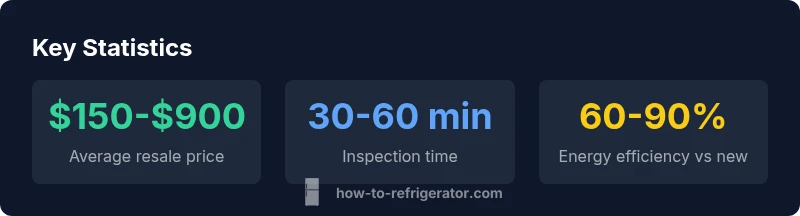
| Like-new (1-3 yrs) | $400-$900 | Best performance, newer components | Higher price, limited availability |
| Good (3-7 yrs) | $250-$600 | Solid balance of price and reliability | Possible wear on seals or interior panels |
| Fair (8+ yrs) | $150-$350 | Very affordable | Higher risk of failures, potential repair costs |
| Refurbished | $300-$700 | Warranty often included, tested quality | Variable quality, shorter lifespan |
FAQ
What should I check first when buying a used refrigerator?
Start with seals and doors, then test cooling and cycling. Verify the model age and energy rating, and request a live demonstration if possible.
Check the seals and cooling first, then review the model details and run a quick test.
Is a used fridge safe for food storage?
Yes, if the unit cools reliably and is clean. Sanitize the interior and replace worn gaskets before use.
Yes, as long as it cools properly and is clean.
How can I tell if a used refrigerator uses energy efficiently?
Look for an Energy Star label (if available), check the model year, and compare estimated annual energy consumption to similar new models.
Check energy labels and compare energy usage to similar new models.
Should I buy a used fridge with a warranty?
A warranty adds protection against unexpected failures; seek a short-term warranty from the seller or refurbisher when possible.
Yes, warranty coverage is smart for peace of mind.
What are common issues in older units I should watch for?
Watch for weak seals, condenser dust, compressor noise, and defrost drain problems; these often indicate repair costs to come.
Watch for seals, noise, and drainage issues.
“A used refrigerator can be a smart buy when you verify cooling, seals, and energy efficiency—without overlooking safety concerns.”
Top Takeaways
- Inspect seals and doors before purchase
- Test cooling and temperature stability
- Ask for model details and maintenance history
- Compare price ranges by age and condition
- Choose reputable sellers and verify return policies