Side by Side Refrigerator vs French Door: An In-Depth Comparison
Compare side-by-side and French-door refrigerators to determine which layout best fits your kitchen, storage needs, and lifestyle. Analytical guidance on access, capacity, energy use, and value.


Side-by-Side vs French-Door: Key Differences
When you compare the two major configurations—side-by-side and French-door—you’re weighing access patterns, space distribution, and how you store groceries. The side-by-side layout uses vertical doors that split the cabinet into independent zones, while French-door models pair two upper doors with a bottom freezer. This fundamental difference affects how often you reach for items in the fridge versus the freezer, how easy it is to load bulky groceries, and how the interior space feels in day-to-day use. The How To Refrigerator team emphasizes that the decision should start with your kitchen’s footprint, your typical grocery haul, and how you move around the kitchen while loading and unloading.
From a design perspective, the side-by-side configuration tends to emphasize compartmental clarity—each zone has defined access. French-door layouts emphasize large, uninterrupted shelf space in the fridge and a separate bottom freezer, which can simplify loading and unloading large platters or party trays. The choice also communicates your maintenance approach: a unit with fewer split doors can be easier to seal consistently, but the wide doors on French-door models can be more challenging in tight spaces. Understanding these differences equips you to anticipate the daily rhythm of use and long-term upkeep.
Space utilization and layout implications
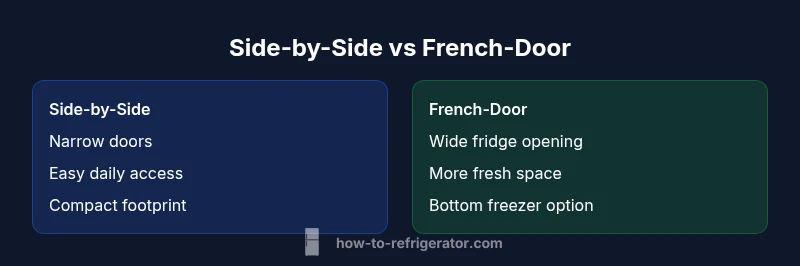
Space is the most tangible constraint when choosing between configurations. A side-by-side refrigerator vs french door comparison begins with width, door swing, and interior organization. Side-by-side units generally have a narrower overall footprint for the doors, which can be advantageous in narrow kitchens or spaces where vertical room dominates. However, each door still requires clearance to swing fully, which can complicate placement near walls or in tight corridors. French-door models, by contrast, often sport wider door openings and a wider frontal footprint, but they maximize interior air volume in the fridge area and typically pair the upper doors with a bottom freezer. That bottom freezer often offers more practical storage space for bulk groceries, trays, and frozen meals. In real-world kitchens, you’ll notice these differences in daily use: quick grab-and-go items in a side-by-side versus bulk grocery storage in a French-door.
For homeowners evaluating space, a practical test is to measure the actual clearance between the unit and adjacent cabinetry, then visualize the pace of your routine—how often you open the fridge during meal prep and how often you access the freezer during grocery runs. How To Refrigerator’s analysis shows that the practical impact of space is often the deciding factor when contrasting the two configurations, especially in smaller kitchens where every inch counts.
Accessibility and daily usage patterns
Access patterns play a pivotal role in choosing side-by-side versus French-door setups. Side-by-side doors can provide quick, one-handed access to both compartments while preserving a tall, slender profile that fits narrow spaces. This is particularly advantageous for households that frequently switch between fresh and frozen items or that have tall, narrow grocery storage needs. French-door layouts excel when your pattern involves loading wide platters, baking sheets, or multiple containers at once. The wider fridge opening reduces the need to rearrange items to make space for large items, which can save time during busy mornings or dinner prep.
Accessibility isn’t just about the door shape—it also depends on interior design. Shelving that accommodates tall beverage cartons, wide deli trays, and gallon jugs can influence your selection. In environments with children or elderly household members, the predictability of where items live (top shelf for frequently used items, bottom shelf for bulky items) may influence preference toward one configuration. Across the board, the choice should align with your family’s routine and how you physically interact with the fridge on a daily basis.
Capacity and storage design nuances
Capacity is a common point of comparison in any side-by-side refrigerator vs french door analysis. Side-by-side models tend to provide equal or near-equal cold storage across zones, with the freezer occupying a vertical split on one side. This arrangement can make it easier to locate snacks and beverages and to avoid misplacing items in the freezer. French-door models, with their two upper doors, usually emphasize a large, accessible fresh-food compartment with flexible shelving and tall storage options. The bottom freezer in French-door configurations is excellent for bulk storage of frozen goods but can feel less convenient if you frequently access the freezer for small items.
Bear in mind that actual capacity depends on the model and interior layout. Features like adjustable shelves, slide-out baskets, and door bins can dramatically alter usable space. Prospective buyers should evaluate how often they store oversized items (cakes, roasting pans, party platters) and whether the arrangement supports daily tasks without excessive rearranging. In practice, the right choice balances how you typically shop and how you cook.
Energy efficiency and maintenance considerations
Energy efficiency and maintenance considerations often follow from the core design of the appliance. Both configurations can be highly efficient, but performance depends on the model, compressor type, and door-seal quality. In some cases, side-by-side units with narrower doors can reduce air leakage paths when doors are opened frequently, potentially modestly improving energy use per door cycle. French-door models, with their wider fridge opening, can experience more air exchange through the larger aperture, which may influence energy usage if not well insulated or if door seals are worn.
Maintenance readiness also matters. Side-by-side units might be easier to seal because you’re managing two smaller doors, whereas French-door configurations with multiple door interfaces require careful alignment and periodic gasket checks to prevent cold air loss. Look for models with features such as door alarm indicators, adjustable door shelves that minimize air gaps, and visible seals around the door frame. Regardless of configuration, routine cleaning of the door gaskets and interior coils will contribute to long-term efficiency and reliability.
Price range and value perception
Pricing plays a critical role in the decision between side-by-side refrigerator vs french door configurations. In general, model families differ in upfront cost based on configuration, capacity, and luxury features. Side-by-side units often target households seeking compact footprint with easy access to both zones, and their price variance reflects feature sets such as water dispensers, ice makers, and smart capabilities. French-door models tend to position themselves as premium options due to their generous fresh-food space, flexible shelving, and upscale styling. In all cases, price is a function of capacity, build quality, and added amenities rather than a fixed rule tied solely to the configuration.
When evaluating price, it’s helpful to compare total cubic-foot capacity, not just exterior dimensions, and to assess the interior layout for the kinds of items you typically store. The best value comes from a model that aligns with your buying, grocery-purchasing, and kitchen layout, rather than chasing a trend or a single feature set. How To Refrigerator recommends anchoring your decision in real-world needs and designing a simple test run of a few weeks with items you regularly keep on hand.
Kitchen layout compatibility and installation tips
Your kitchen geometry can make or break a successful fit for either configuration. Side-by-side models tend to fit better in narrow aisles or spaces where you want to maximize vertical clearance and minimize the width of the appliance footprint. French-door configurations often require a bit more wall space to accommodate the wider door swing and the bottom freezer box. Before purchasing, measure the clearance at all rotational points, including the swing path of the doors and the space needed for door bins. Leave space for airflow and for routine cleaning around the condenser coils at the back and sides.
If your kitchen has an island or an open-plan layout, you’ll want to think about how traffic flows around the fridge. A side-by-side model can be more forgiving in tight kitchens, while a French-door layout can feel more integrated in larger spaces where the appliance is a focal design feature. In both cases, plan for a solid floor beneath the unit and consider door-opening paths when placing adjacent cabinets, drawers, and appliances.
Measuring space and making a decision: a practical checklist
To make a measurable choice between a side-by-side refrigerator vs french door, start with a simple checklist:
- Confirm the exact floor space and door-swing clearance for both configurations in your kitchen.
- Assess how you store groceries: do you rely on wide shelves for large platters or more compartments for daily items?
- Evaluate traffic patterns: will doors open toward a walkway or into a workspace?
- Consider height and ceiling constraints if you have overhead cabinets that could interfere with tall doors.
- Review interior layout options: adjustable shelves, door bins, and crisper drawers that fit your typical groceries.
A methodical measurement and a practical test of your grocery routine can reveal the best choice, avoiding post-purchase regret. How To Refrigerator emphasizes that preliminary measurements and real-world testing are more predictive of satisfaction than glossy specs alone.
Practical buying guide: decision framework and tips
A robust decision framework helps you translate the differences into a concrete choice. If your kitchen is compact and you do a lot of door-open activity, a side-by-side configuration may offer quicker access with a smaller door swing footprint. If you regularly shop in bulk and store tall items, a French-door setup typically yields better frontal space and shelf flexibility. Create a short list of must-have features (energy efficiency, ice maker, smart controls, adjustable shelves) and rate each configuration against that list. Consider long-term upkeep, warranty coverage, and whether the model’s interior layout truly supports how you cook and store groceries.
Finally, take a hands-on test if possible. Visit showrooms or retailers to physically open the doors, test shelf adjustability, and assess how easy it would be to retrieve items from the back of shelves. Small observations during this test—like whether the door shelves feel sturdy or whether the freezer access is awkward—often predict satisfaction more accurately than model numbers or marketing copy.
Common mistakes to avoid and final checklist
Avoid common mistakes that lead to buyer’s remorse. Do not overvalue a single feature at the expense of everyday practicality—things like ice makers and water dispensers can add cost and potential maintenance without solving storage issues if your real needs are different. Do not prioritize aesthetics over function in a way that makes daily tasks inconvenient. Finally, don’t ignore delivery and installation requirements: ensure your space can accommodate the chosen configuration’s door swing and bottom freezer mechanics, and verify that the unit can operate within your home’s electrical and ventilation setup.