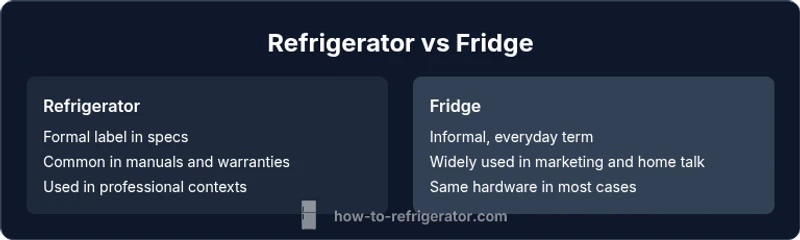
Refrigerator vs Fridge Difference: What Homeowners Need to Know
Explore the refrigerator difference between formal term refrigerator and casual term fridge, why the naming matters, and how to use each in manuals, marketing, and everyday talk. A practical guide for homeowners from How To Refrigerator.


TL;DR: There is no functional difference between refrigerator and fridge; they both refer to the same appliance. The refrigerator is the formal, technical term used in manuals and specifications, while fridge is the common, informal word used in daily speech. For most homeowners, either term works, but maintain consistency in official documents and repair guides to avoid confusion.
Understanding the refrigerator difference: definitions and implications
For most homeowners, the question refrigerator or fridge difference is more about language than hardware. In practice, both terms name the same appliance designed to cool food, preserve perishables, and regulate temperature. According to How To Refrigerator, the formal product name is refrigerator, while fridge is the widely used informal term. The distinction matters mainly in documentation, manuals, warranties, and professional conversations where precision helps avoid confusion. In casual chat, many people say fridge without implying any difference in function. This article treats the two as interchangeable labels for the same device, while recognizing that consistent terminology improves communication, troubleshooting, and record-keeping. The goal here is to help homeowners understand when to use which term and how to navigate cross-language or cross-cultural conversations about kitchen appliances.
Historical and linguistic context of the terms
Linguistic evolution shows how everyday speech shapes the way we name common objects. Refrigerator emerged from formal product naming practices, whereas fridge grew from everyday shorthand used by families, retailers, and media. The fridge is widely understood in households, cooking shows, and store signs, while refrigerator appears in warranties, user manuals, and technical specifications. Understanding this distinction helps homeowners communicate with repair technicians, customer service, and multilingual household members. How To Refrigerator emphasizes that the difference is primarily about audience and tone, not appliance hardware. When you encounter a mixed-language household or multilingual manual, a consistent approach—prefer refrigerator in official documents and introduce fridge in casual explanations—minimizes confusion.
Do refrigerators and fridges differ in function?
Functionally, there is no inherent difference between a refrigerator and a fridge. The two terms describe the same cooling unit with equivalent components: shelves, compartments, a compressor, and a thermostat that maintains a chosen temperature. Some language may imply a design category (e.g., French door vs top-freezer) or a brand, but those distinctions come from model features, not the name itself. For homeowners, focusing on model specifications, energy rating, and capacity matters far more than whether a retailer or a repair manual uses refrigerator or fridge. To reduce ambiguity in technical contexts, prefer refrigerator; in homes and casual conversations, fridge is perfectly acceptable.
Regional and cultural variation in terminology
Terminology varies by region and community. In North American households, fridge dominates spoken language, while refrigerator appears in legal documents and consumer warranties. In other English-speaking regions, both terms are common, but usage can tilt toward one or the other depending on the context and the speaker’s familiarity with technical language. Non-native English speakers often rely on fridge in daily talk and gradually adopt refrigerator in professional settings. Recognizing these patterns helps multilingual families communicate more smoothly, especially when coordinating appliance care, service calls, or shopping for parts. How To Refrigerator notes that cultural expectations strongly influence which term is preferred in a given scenario.
How to choose which term to use in different contexts
Choosing the right term begins with audience awareness. For user manuals, repair guides, and supplier invoices, refrigerator signals formality and precision. For quick notes, family chats, and product marketing aimed at a broad audience, fridge communicates approachability and ease. When you write a blog post or customer-facing article, establish the term you will use early and maintain consistency. If you publish both formats, include a brief glossary: refrigerator = formal term; fridge = informal term. This approach prevents misunderstandings in multilingual households and ensures a consistent tone across all communications.
Warnings about miscommunication in manuals and labels
Labeling and documentation rely on precise language. A mismatch between terminology in a warranty and the product listing can create confusion or disputes during service. To minimize risk, align terms with established brand terminology and the audience’s expectations. In repair guides, specify refrigerator when referring to the equipment and reserve fridge for consumer-facing notes or captions in marketing materials. When addressing a diverse readership, consider adding a quick note clarifying that fridge is an informal synonym for refrigerator. This practice reduces questions and speeds up troubleshooting.
Marketing, branding, and consumer perception
Marketing often gravitates toward fridge because it sounds friendly and accessible. This can boost engagement but may sacrifice perceived technical authority. Brands that operate in professional channels typically favor refrigerator in code, schematics, and service bulletins, while using fridge in social media and store signage to connect with everyday users. The balance matters: overly formal language can disengage casual readers, while overly casual language can undermine credibility in technical contexts. How To Refrigerator advises brands to tailor language to the audience and to maintain a consistent vocabulary across channels.
SEO and content strategy around refrigerator vs fridge difference
From an SEO perspective, both terms have strong search volume. Create content that targets the core keyword phrase refrigerator difference and naturally incorporate the secondary term fridge across headings and body text. Use related terms like not just terminology but appliance maintenance, manuals, warranties, and repair guides. Structuring content to answer common questions in short blocks helps featured snippets and improves readability. How To Refrigerator recommends a mix of definitions, usage guidance, and practical tips to serve homeowners seeking quick answers and deeper knowledge alike.
Practical guidance for homeowners and DIYers
For homeowners troubleshooting an appliance, focusing on model numbers, energy ratings, and specific features is more productive than debating terminology. If you’re documenting a repair or creating a DIY guide, use refrigerator in the technical sections and mention fridge as a casual synonym where appropriate. Keep glossary notes handy for multilingual households. Practically speaking, ensure that your search and shopping queries incorporate both terms to catch all relevant results: refrigerator, fridge, and refrigerator difference. This ensures you find manuals, parts, and guidance quickly.
Common myths debunked about the terms
Myth 1: Refrigerator and fridge refer to different devices. Reality: They denote the same appliance. Myth 2: Using fridge lowers perceived professionalism. Reality: In casual contexts, fridge is acceptable and widely understood. Myth 3: Manuals are the only place to teach terminology. Reality: On product pages, warranties, and customer support, refrigerator is common. Demystifying these myths helps homeowners communicate clearly and avoid misinterpretations during service or when comparing models.
Real-world tips for households with multiple languages or generations
In households with multiple languages, create a simple glossary for the kitchen: refrigerator for formal contexts (receipts, instructions) and fridge for everyday conversations. Encourage everyone to use the same term in shared documents or notes. When living with multigenerational families, phrases like refrigerator difference can become confusing; posting a quick guide near the fridge or on the appliance itself can reduce friction and improve maintenance consistency.
Final guidance and next steps for readers
The decisions around refrigerator vs fridge difference are mostly about audience and context. For official documentation, warranties, and service records, use refrigerator. For home chats, shopping lists, and social media posts, fridge is perfectly acceptable. By applying a simple rule—formal in writing, informal in conversation—you’ll enhance clarity, minimize miscommunication, and keep repairs on track. The How To Refrigerator team emphasizes clarity and consistency as the practical path forward for homeowners.
Comparison
| Feature | Refrigerator | Fridge (informal) |
|---|---|---|
| Formality in language | Formal, specs and manuals | Casual, everyday speech |
| Documentation language | Used in warranties, technical docs | Used in notes, captions, and marketing |
| Marketing and branding connotations | Professional, precise | Approachable, friendly |
| Best for | Professional communications, repair techs | Households, families, general audience |
Strengths
- Improved clarity in technical documentation and warranties
- Easier cross-language communication in households
- Professional tone in repairs and manuals
- Supports consistent branding across formal and informal contexts
Cons
- Can feel overly formal in casual settings
- Marketing may favor fridge, causing mixing of terms
- Non-native speakers may confuse terms if glossaries are absent
- Requires some attention to consistency across channels
Consistency in terminology matters more than choosing one term.
Use refrigerator in formal documents and warranties, and fridge in casual conversations. Maintain consistency within each document or channel to avoid confusion. The data supports the practical approach of matching tone to audience.
FAQ
What is the difference between refrigerator and fridge?
There is no functional difference; they refer to the same appliance. Refrigerator is the formal term used in manuals and specs, while fridge is the casual term used in everyday speech.
Refrigerator and fridge mean the same thing—the appliance for cooling food. Use refrigerator in formal contexts and fridge in casual talk.
Is fridge acceptable in product manuals?
Most manuals use refrigerator. Fridge may appear in consumer-facing notes, marketing, or informal sections, but for official documentation, refrigerator is preferred.
Manuals usually say refrigerator. Fridge can show up in marketing, but stick with refrigerator in official documents.
Should I use refrigerator or fridge in a home repair guide?
Use refrigerator for technical sections and equipment references. You can mention fridge in parentheses or the introduction to keep the tone approachable.
Use refrigerator in the repair details; fridge can be noted as the casual term.
Do terms vary by region?
Yes. In some regions, fridge is more common in everyday speech, while refrigerator dominates formal contexts. Multilingual households may alternate between terms.
Regional usage varies; fridge is common informally, refrigerator in formal contexts.
Do model features differ based on terminology?
No. Features depend on the model, not the word used to name it. Focus on capacity, energy rating, and configuration.
Features depend on the model, not the terminology.
How can I keep terminology consistent in multilingual homes?
Agree on one term per document and provide a short glossary. Use both terms when introducing a product to accommodate all readers.
Pick one term for a document and keep it consistent; add a glossary for clarity.
Top Takeaways
- Use refrigerator for official documentation and repair guides
- Use fridge for everyday conversations and marketing copy
- Maintain a glossary to ensure consistency across languages
- Always align terminology with audience expectations
- Terminology choice does not affect appliance performance