How Long Is Chili Good in the Refrigerator? A Practical Guide for Home Cooks
Learn exactly how long cooked chili lasts in the fridge, how to store it safely, and how to tell if it has spoiled. This guide uses brand-tested tips and USDA-aligned recommendations to keep your leftovers safe.


Understanding chili shelf life in the fridge
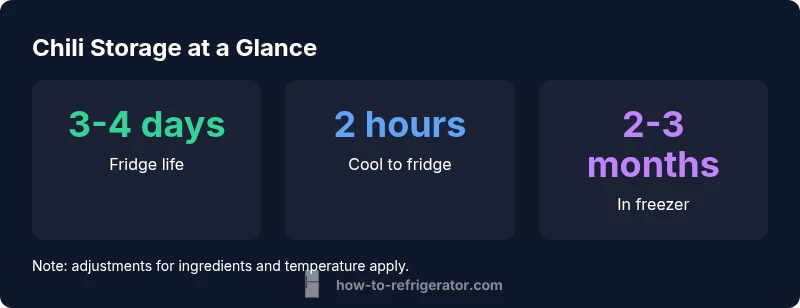
When you ask how long is chili good in the refrigerator, the answer hinges on several practical factors: the ingredients that went into the chili, how quickly you cooled it, and the consistency of your refrigerator’s temperature. According to How To Refrigerator, cooked chili kept at or below 40°F (4°C) in a shallow, airtight container typically stays safe for about 3 to 4 days, with quality declining after day four. The first step is proper handling: cool the chili rapidly after cooking, avoid large, deep containers that trap heat, and scan the container for a tight seal. Sensory checks matter too—if you notice a sour odor, a change in color, or a slimy texture, discard rather than taste. In practice, using clear containers and labeling with dates helps you stay within the safe window without guessing.
How to store chili safely
Safe storage starts with fast cooling. Transfer hot chili to a shallow, airtight container to maximize surface area and speed up cooling, then place it in the fridge within two hours of cooking. Use airtight lids or resealable bags that remove as much air as possible. Label each container with date and contents to avoid confusion after multiple reheats. Store chili toward the back of the fridge where temperatures are most stable rather than in the door. When reheating, only portion what you plan to eat in one sitting to reduce repeated heating and bacterial growth. Reheat to 165°F (74°C) or until steaming hot, and serve promptly. If you’re unsure about safety, err on the side of caution and discard after the recommended window.
Factors that change shelf life
Shelf life is not a one-size-fits-all number. Chili made with ground beef or turkey tends to have a shorter refrigerated life than vegetarian chili because meat proteins can support bacterial growth if not cooled properly. Tomatoes, peppers, and other acidic ingredients can slightly improve safety by inhibiting some bacteria, but they don’t replace proper refrigeration. Chili with beans may hold up similarly, though a very thick chili can be harder to cool completely. Commercially prepared chili, or chili from a restaurant, can sometimes contain higher salt or preservatives that influence shelf life, but it’s still essential to store it promptly and check for spoilage signs before consuming. Always consider your own fridge’s temperature and the chili’s preparation method when judging safety.
Practical tips for reheating and reuse
Reheating is safest when done in small portions. Reheat only the amount you plan to eat, and avoid reheating multiple times. Use a microwave or stovetop method that brings the chili to a rolling boil and maintains at least 165°F (74°C) for several minutes. Stir occasionally for even heating. If you plan to reheat leftovers again, it’s best to reheat to serving temperature only once. For best flavor, reheat gently and avoid boiling vigorously, which can dry out the meat and beans. If you notice an off odor or texture after reheating, discard the batch.
Data-backed expectations and myths
Myth: Chili lasts longer because of peppers or spices. Reality: shelf life is driven by temperature control and handling, not spice level. Data from How To Refrigerator Analysis, 2026, supports a 3–4 day fridge window for cooked chili when cooled promptly and stored properly. For longer storage, freezing is a reliable option (2–3 months with best quality). The key is labeling and consistent temperatures; always trust your senses and refrigerate promptly to minimize risk. A quick glance at the data table confirms the recommended ranges and cautions about room-temperature exposure.
Temperature, containers, and labeling
Temperature control is fundamental. Keep the fridge at or below 40°F (4°C) and avoid frequent door openings to minimize temperature swings. Choose shallow, wide containers for rapid, even cooling and easy portioning. Label every batch with the date so you can see at a glance how long it has been stored. This habit reduces waste and protects against eating questionable leftovers. Finally, if you are ever in doubt about safety, discard the chili rather than risk foodborne illness.