Can You Get a Refrigerator That Opens to the Left? A Homeowner's Guide
Explore whether you can buy a refrigerator that opens to the left, how common left-swing models are, hinge options, and practical steps for choosing and configuring a left-opening fridge.


Yes—it's possible to buy a refrigerator that opens to the left, though availability varies by model and region. Most major brands offer left-swing doors on select refrigerators or through reversible-door configurations. If your chosen model doesn’t explicitly list a left-hand option, you can often request hinge-configuration during purchase or choose a model with a reversible hinge system. Verify the door swing before finalizing delivery to avoid surprises.
Understanding door swing basics
Door swing refers to which side the hinges are mounted on and how the door opens. For refrigerators, common configurations are left-door, right-door, or reversible hinges that let you swap the swing direction. The availability of a left-opening option depends on the model family, door configuration, and regional inventory. According to How To Refrigerator, a growing share of mainstream models now offer left-swing doors on select lines, especially among French-door and side-by-side configurations. When evaluating a model, always check the product specifications for the exact hinge orientation before purchase. If you live in a region with limited stock, consider online retailers or a local dealer who can special-order the left-swing variant. A quick note on installation: some doors are pre-drilled for a specific swing, while others are truly reversible with simple hinge swaps.
When you compare models, look for phrases like “left-hand hinge” or “reversible door” in the spec sheet. This is a reliable indicator that the manufacturer designed the model with the option to switch doors at delivery or in-service installation. Remember that door swing can affect interior layout, handle alignment, and the path the door travels when opening in tight kitchens. If you’re remodeling, plan for clearance and ensure your cabinet above the fridge has enough space for the door to swing fully without obstruction.
Availability by refrigerator category
Availability of left-opening doors varies by fridge category, brand lineup, and model year. French-door refrigerators often have broader configurability thanks to two doors and a large main compartment, making left-hand swing options more common. Side-by-side models also tend to offer left-swing configurations in many catalog entries, though not universally. Traditional top-freezer or bottom-freezer units are less likely to advertise a left-door option, but some models still support a hinge swap. To maximize your chances, search by specific model families and confirm the exact door swing before purchase. Keeping an eye on updated spec sheets and retailer Q&A can save you from ordering the wrong swing. If you’re working with a kitchen designer, ask for a plan that accommodates a left-hand swing and verify future serviceability.
For homeowners prioritizing accessibility, a left-opening fridge can improve reach from certain seating positions or work zones. However, ensure that your kitchen layout and adjacent appliances won’t collide with the swing path. Remember that regional product lines can influence availability, so you may need to widen your search geographically or consider custom-order options.
How to verify left-hinge availability before you buy
The most reliable way to confirm left-opening capability is to read the product specifications and consult the retailer or manufacturer. Start with the model’s tech sheet, then cross-check online reviews and Q&A sections. If the model is listed as “reversible door,” confirm the required tools and steps to perform the swap or whether a professional service is needed. Some brands offer hinge kits or door-swing adjustments as part of installation, while others require a model-specific service call. If you’re unsure, contact a local appliance specialist to verify fit, clearance, and warranty implications. Always request documentation on hinge orientation from the seller before placing the order. If you’re between models, compare two options side-by-side to ensure one has a clearly stated left-swing configuration and compatible hinge hardware.
In addition to product listings, check delivery notes. Some retailers will flip doors at delivery, while others require pre-delivery assembly. If you need a left-opening fridge but can’t find one in stock, ask about lead times for a special-order unit or a factory-order option that guarantees the swing direction. Finally, verify your kitchen’s clearance around the hinge path and confirm that the door handles align with your existing cabinetry and appliance lineup.
Practical tips: choosing left-opening vs reversible hinges
When deciding between a fixed left-opening door and a truly reversible hinge, consider the long-term practicality. A reversible hinge offers flexibility if you move houses or rearrange the kitchen, but it may come with a small service cost or require a special kit. If you choose a model with a reversible hinge, verify that the door weights and gasket tolerances are compatible with the reversal process, and check whether any warranty limitations apply after the swap. For most homes, a left-opening model is a straightforward choice that minimizes the risk of misalignment during installation. Also weigh interior layout—the location of shelves, racks, and crisper bins—to ensure you don’t lose usable space when the door swings open. In tight kitchens, a left-swing door can reduce access friction if the opposite wall or cabinet is a barrier. Consider annotating your kitchen plan with the door-swing direction to prevent a costly misorder during purchase.
A practical approach is to test door swing in a showroom or with a home-in-use demo model. If you have corner or island configurations, bring along measurement tools to verify swing arc and clearance. Finally, assess energy efficiency and interior capacity to ensure that the left-opening option doesn’t come at the cost of usable space or cooling performance.
Installation considerations and potential limitations
Swapping door swing might seem straightforward, but several limitations exist. Some refrigerator doors are not designed to be swapped easily and require manufacturer-specific hinge hardware. In other cases, the door latches, seals, or the vertical alignment of shelves could differ between swing directions. Before attempting any hinge changes, confirm warranty coverage and the correct torque specs for the hinge screws. If a hinge change is necessary, you may need to detach the door, reattach it on the opposite side, and recalibrate the door seals and alignment. In many cases, a certified technician is recommended to avoid alignment issues that could reduce cooling efficiency or cause door leaks. If you plan a DIY approach, ensure you have the right tools, protective gloves, and a clear step-by-step guide from the manufacturer. Always unplug the unit during a hinge swap and keep a service manual handy for model-specific instructions.
How to swap hinge sides: step-by-step overview
Before starting, confirm model compatibility and have your tools ready: screwdriver set, possibly a hex key, a level, and a helper. 1) Unplug and empty the fridge, then remove items from inside and the doors. 2) Support the door with a helper, detach the hinge covers, and unscrew the hinge pins or screws. 3) Move the door to the opposite side and align the hinges with pre-drilled holes or install the new hinge plates as required by the manufacturer. 4) Reattach the door, reinsert screws, and tighten gradually while guiding the door to a level position. 5) Check the door seal and adjust if needed to ensure a proper seal. 6) Restore shelving and test the door swing in operation. If you encounter misalignment, consult the manufacturer’s installation guide or hire a professional to complete the task. Pro-tip: label screws and keep track of which hinge goes where to avoid mixing parts.
Common mistakes to avoid when changing door swing
Avoid assuming that any hinge kit will fit any model. Always verify model compatibility and use manufacturer-approved hardware. Do not skip unplugging the unit or mixing up hinge screws, which can throw the door off balance. Skipping calibration or failing to relevel the unit can cause doors to rub or seal poorly. Finally, avoid attempting a hinge reversal if the warranty would be voided or if the door weight and frame geometry are not suited for a swing change. If in doubt, hire a licensed technician to perform the swap and ensure it’s done safely and correctly.
Door swing availability overview
| Door Swing | Typical Availability | Notes |
|---|---|---|
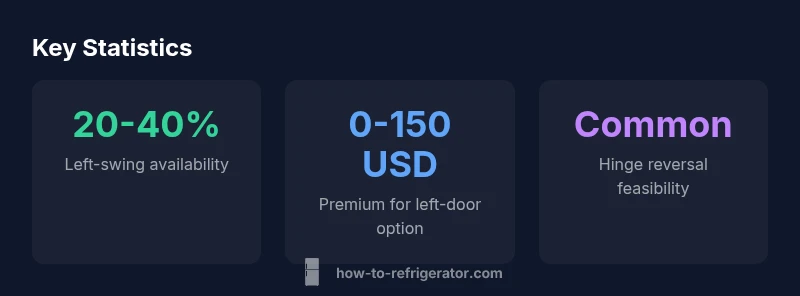
| Left-opening | 20-40% | Most French-door and some side-by-side lines |
| Right-opening | Widely available | Default configuration for many models |
| Reversible-door models | Uncommon | Check model compatibility before purchase |
FAQ
Is a left-opening refrigerator readily available in most stores?
Left-opening refrigerators are available in many stores, especially for French-door and side-by-side configurations. Availability varies by region and model year, so it’s wise to check online listings and ask a sales associate to confirm the exact swing direction.
Yes. Look for models labeled with left-hand hinge or reversible doors, and confirm with the seller that the swing direction is left before you buy.
Can I convert a right-opening fridge to left-opening after purchase?
Conversion is model-dependent. Some models support hinge reversal, but others require a different door shell or hinge kit. Always consult the manufacturer’s manual and warranty terms before attempting a swap.
Conversion is not guaranteed; verify model compatibility and warranty effects before attempting any hinge swap.
Do left-opening fridges cost more than standard models?
There can be a small premium for left-opening capability on certain models, but pricing varies by brand and region. Compare total cost of ownership rather than sticker price alone.
There may be a minor premium, but it isn’t universal—check the exact model details.
Are there energy efficiency differences related to door swing?
Door swing direction does not inherently affect energy efficiency. Instead, look at insulation, door seals, and overall design to assess efficiency.
Swing direction doesn’t change efficiency; focus on seals and insulation for best performance.
What should I measure before buying a left-opening fridge?
Measure clearance for door swing, handle reach, and countertop or cabinet proximity. Check interior layout to ensure shelves and crisper bins won’t be obstructed by the swing.
Measure swing clearance, handle reach, and interior layout so the door won’t hit anything.
Can I hire a professional to swap hinge sides after delivery?
Yes, many appliance technicians can swap hinges if the model supports it. Confirm warranty coverage and get a written quote before scheduling.
Yes—many pros can handle hinge swaps if supported by your model.
“Left-swing refrigerators are increasingly common in mainstream lines, but always verify hinge orientation before purchase.”
Top Takeaways
- Check model specs for door swing before purchasing
- Ask about hinge-reversal options during checkout
- Plan kitchen clearance to accommodate door swing
- Consider professional installation for hinge swaps