Are High End Refrigerators Worth It? A Practical Guide
An analytical buying guide weighing the costs, benefits, and real value of high end refrigerators versus mid-range models. Learn how to decide if a luxury fridge fits your home and budget.


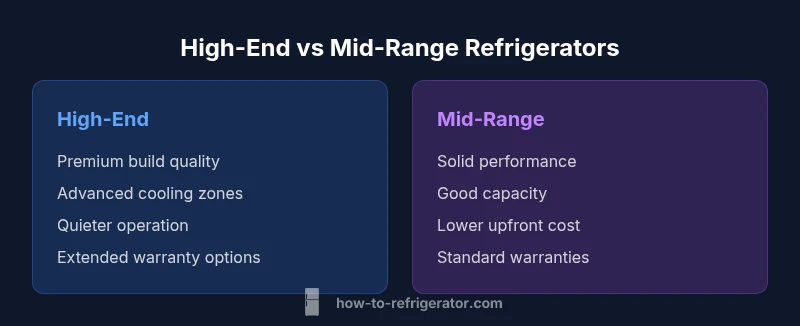
Are high end refrigerators worth it? The quick answer depends on your priorities and budget. If you prioritize premium build quality, advanced cooling technology, quieter operation, better warranty terms, and long-term energy efficiency, they can justify the higher upfront cost. For many households, a carefully selected mid-range model delivers 90% of the benefits at a substantially lower price.
The value proposition explained
When homeowners ask whether are high end refrigerators worth it, the answer depends on how you live in the kitchen and how you measure value. The How To Refrigerator team often sees a wide gap between sticker price and long-term cost of ownership. In practical terms, a high-end fridge typically offers stronger insulation, quieter compressors, more precise temperature control, better humidity management, and a broader feature set. These factors can translate into more reliable preservation of fresh food, less frequent defrosting, and a more pleasant kitchen environment. However, premium features rarely translate into a proportional savings unless they align with your usage patterns. If you cook frequently, shop weekly for perishables, or store specialty items, you may notice tangible benefits. For smaller households or those on strict budgets, the incremental cost may not be justified. According to How To Refrigerator, the decision hinges on your expected lifetime usage, maintenance expectations, and how much you value a quiet kitchen, modern conveniences, and potential energy savings over time. In this block we’ll unpack the key dimensions, separate fact from marketing, and give you a framework to decide.
Feature depth: how premium design translates to value
Premium refrigerators bundle a range of features that can matter in daily use and long-term ownership. The most important driver is cooling precision: multiple temperature zones, active humidity control, and sensors that adjust for door openings and variable loads. Quiet operation is the next big differentiator; premium models often employ better compressors, dampers, and vibration isolation, which makes a noticeable difference in open-plan homes. Storage flexibility matters too: more adjustable shelves, deeper crisper drawers, and dedicated spaces for wines or beverages can reduce the time you spend organizing groceries. Beyond practicality, premium finishes and build quality contribute to durability and resale value. Finally, some luxury models emphasize connectivity and diagnostics, enabling proactive maintenance and remote monitoring. When evaluating models, map these features to how you live in the kitchen—meal planning cadence, shopping habits, and entertaining patterns. This alignment is exactly what determines whether you derive meaningful value from a premium unit.
Cost considerations and ownership costs
Price is only one part of the equation. High-end refrigerators commonly command significantly higher upfront costs, while mid-range models balance price and performance. For budgeting, think in ranges rather than exact numbers: mid-range units often fall in a broad band, while premium lines occupy a higher tier. Beyond sticker price, consider delivery, installation, and possible cabinet front integration if you want a built-in look. Running costs also matter: electricity use, defrost cycles, and potential repair costs influence total ownership. Maintenance plans and warranty terms affect long-term affordability; longer warranties can reduce concern about service expenses, especially for models with sophisticated electronics. Finally, resale value can vary by brand and condition; premium models sometimes retain value better, but depreciation is real. When you model ownership, simulate scenarios like a 10-year horizon with average usage, and be mindful of hidden costs such as mismatched ice maker warranties or extended service fees.
Space, footprint, and kitchen integration
Space planning matters more with high-end units. Built-in or panel-ready models require precise measurements and sometimes professional installation. Large-capacity fridges may offer more usable storage but demand more kitchen footprint or a larger door swing. If you have a small kitchen, consider depth constraints and door clearance; a counter-depth or vertical-only design could limit internal capacity but improve sight lines. The finish matters too: brushed stainless, matte black stainless, and glass panels create different aesthetic impacts and may require more intensive cleaning. Alignment with cabinetry and surrounding appliances helps maintain resale appeal as well as a cohesive look. Before shopping, take careful measurements, verify clearance for doors and drawers, and confirm the model’s ventilation needs to prevent overheating.
Energy usage and efficiency impressions
Energy efficiency is a common reason people upgrade, but not a universal one. Some high-end refrigerators are designed to maximize insulation and reduce idle consumption, while others emphasize performance enhancements that marginally affect energy use. Your actual electricity bill depends on usage patterns, door-open frequency, and climate. Look for energy labels or credible efficiency ratings and compare similar sizes. If you run a large household with frequent grocery runs or long open-door periods, the efficiency of a premium model can offset some of the upfront cost over the appliance’s lifetime. Remember that standby power and defrost strategies influence long-term costs, so pick a model with a well-regarded cooling algorithm and a reputable compressor design.
Daily use and user experience
This section covers the day-to-day reality of living with a luxury fridge. User interface design—smart screens, quick-access zones, and intuitive control layouts—saves time and reduces friction when storing or retrieving items. Noise matters: a quieter compressor and solid dampening make a big difference in open-plan homes. Temperature stability reduces food spoilage, which can translate into financial savings and reduced waste. The door seals should be robust and easy to replace; weak seals are one of the most common reasons for energy waste and odor transfer. Finally, consider maintenance overhead: more features may require more routine software updates or specialized service. If you’re highly particular about organization, a premium interior layout can actually improve daily efficiency even if the energy savings are modest.
How to compare models: a practical checklist
Use a step-by-step approach to separate marketing from measurable value. Start by defining your three must-haves (for example: built-in look, quiet operation, precise humidity control). Then collect data on capacity per cubic foot, energy efficiency rating, and warranty length. Compare door configurations (French door vs side-by-side), freezer layout, and ice-maker quality. Review real-world user feedback about reliability and service responsiveness. Don’t forget installation: panel readiness, integrated water line, and ventilation clearance affect performance. Finally, price out total ownership over 8–12 years to see if the premium features justify the cost in your home context.
Common misconceptions about premium refrigeration
This section addresses frequent myths: that bigger is always better, that premium models always save the most energy, or that luxury brands guarantee trouble-free operation. In reality, capacity and energy use depend on layout and usage patterns, not just price tag. Another common belief is that extended warranties remove risk entirely; they reduce risk but do not eliminate it, and some coverage excludes routine service. Finally, the assumption that smart features automatically improve food preservation is not always true; reliability and user adoption matter as much as the gadgets. By testing models in-store and reviewing independent benchmarks, you can separate hype from practical value.
Decision framework and practical tips
To decide if are high end refrigerators worth it for your home, build your own value model: list your must-haves, estimate lifetime ownership costs, and assign a weight to comfort and convenience. Use a grid that scores models across cooling performance, capacity, durability, noise, and warranty. If a model meets your essential criteria and offers meaningful long-term benefits, it may be worth the premium. If not, a thoughtfully chosen mid-range option often delivers most of the advantages at a lower risk. Finally, remember that installation quality and after-sales support can swing the value equation as much as any feature set.
Comparison
| Feature | High-end Refrigerator | Mid-range Refrigerator |
|---|---|---|
| Price range (upfront) | $3,000–$8,000 | $1,500–$3,000 |
| Energy efficiency | Often high, model-dependent | Solid efficiency with good value |
| Storage flexibility | More configurable options, specialized zones | Good capacity with fewer premium zones |
| Build quality/warranty | Premium construction, longer warranties typically | Standard construction, conventional warranties |
| Smart features | Advanced connectivity, diagnostics, app control | Basic smart features or none |
| Maintenance cost over time | Potentially higher due to complexity | Lower overall maintenance costs |
| Best for | Large families, frequent entertaining, customization | Budget-conscious buyers, small households |
Strengths
- Improved food preservation with precise temperature control
- Quieter operation and better integration with open-plan living
- Enhanced resale value and kitchen aesthetics
- Better long-term energy efficiency in some models
- Solid durability and premium fittings
Cons
- Substantial upfront cost
- Higher potential repair costs and parts delays
- More complex maintenance requirements
- Limited selection in compact footprints
Moderate: high-end fridges are worth it for specific needs, but not for every home
If you value premium design, precise control, and quiet operation, a high-end model can pay off. For many households, a well-chosen mid-range unit delivers most benefits at a lower risk and cost.
FAQ
Are high-end refrigerators worth the extra cost for small households?
The payoff is usually smaller for compact homes. If space is limited, you may not gain enough benefits from premium features to justify the price. Consider a well-rated mid-range model and center your choice on reliability, fit, and energy use.
For smaller homes, the premium features may not justify the extra cost. Focus on reliability, size fit, and energy efficiency instead.
What features justify the price premium?
Key features include precise multi-zone temperature control, humidity management, quieter operation, durable door seals, and robust warranties. Smart connectivity can add value if you use those capabilities regularly.
Look for precise temperature zones, humidity control, quiet operation, and a solid warranty as the main value drivers.
Do high-end refrigerators save energy?
Energy savings depend on model and usage. Some premium units maximize insulation and efficiency, while others focus on performance. Compare comparable sizes and ensure you’re not paying for features you won’t use.
Energy savings vary; compare similar sizes and focus on models with credible efficiency ratings.
What should I look for in terms of warranty?
Prioritize warranties that cover compressors and sealed systems for a longer period. Read exclusions for parts and service, and verify what maintenance the plan requires to remain valid.
Choose warranties that protect compressors and sealed systems, and read the fine print on exclusions.
Can mid-range models match high-end performance?
In many cases, mid-range models offer similar core performance with fewer premium features. They can match essential cooling reliability and capacity while delivering better upfront value.
Often, mid-range models meet essential performance needs with far better upfront value.
Is installation more complicated for premium models?
Premium models may require precise measurements, panel readiness, and professional installation. This adds to upfront costs and lead times but improves integration and performance.
Yes, installation can be more involved for premium models, but it improves fit and performance.
Top Takeaways
- Define your must-haves before shopping
- Model total ownership cost, not just upfront price
- High-end buys are best for large families and cooks with specialized storage needs
- Check warranty coverage for sealed systems and compressors
- Installation quality and crew support can determine value