KitchenAid Refrigerator vs Whirlpool: An Analytical Comparison for Homeowners
An objective, in-depth guide comparing KitchenAid and Whirlpool refrigerators across design, performance, energy efficiency, and value to help homeowners decide which brand best fits their kitchen.


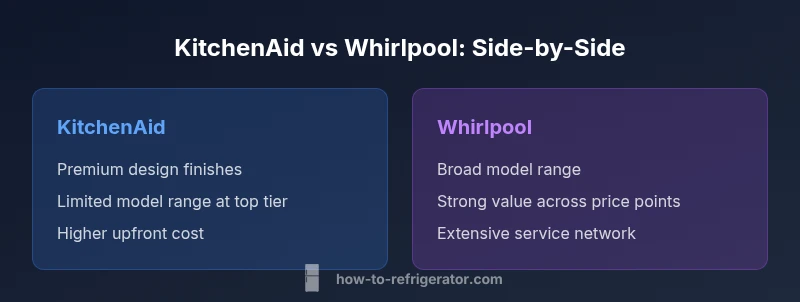
KitchenAid refrigerators target premium design and feature-rich finishes, while Whirlpool offers broader model ranges and strong value across price points. This comparison highlights design, performance, energy efficiency, and ownership costs to help homeowners choose the right brand for their kitchen. The How To Refrigerator team notes that KitchenAid often leads in aesthetics and interior organization, whereas Whirlpool provides more accessible options and robust service networks.
Overview of the KitchenAid vs Whirlpool landscape
Choosing between KitchenAid refrigerators and Whirlpool models involves weighing premium design against broad affordability. The KitchenAid lineup is anchored in premium finishes, specialty configurations, and a design-forward aesthetic, often appealing to homeowners who place a premium on kitchen cohesion. Whirlpool, by contrast, emphasizes variety across sizes, configurations, and price points, aiming to cover more homes with fewer compromises on core features. For homeowners, the decision often hinges on three questions: which brand aligns with existing kitchen hardware, what level of premium features are desired, and what budget is acceptable for total cost of ownership. According to How To Refrigerator, the premium tier from KitchenAid tends to emphasize texture, lighting, and interior organization, while Whirlpool invests in broad access to service, warranty options, and a wider range of entry-level options. The field of competitive refrigerators continues to evolve as energy efficiency standards tighten and smart features proliferate. In this guide we compare product strategies, performance characteristics, and ownership implications to help homeowners make an informed choice that matches their needs.
Design philosophy and target buyer
KitchenAid speaks to buyers who prioritize premium aesthetics, cabinetry integration, and luxury finishes. Aesthetics often translate to premium interior layouts, lighting, and doors that mimic designer appliances. The Whirlpool approach emphasizes breadth: more sizes, finishes, and price brackets to fit a wider set of kitchens. This makes Whirlpool models attractive to first-time remodelers or families balancing budget with essential features. According to How To Refrigerator Analysis, buyers often choose KitchenAid when visual harmony with other appliances matters most, and they choose Whirlpool when value and availability drive the decision. Both brands offer durable construction and long-term usability, but the choice often reflects household priorities—design cohesion versus flexible options—and the purchase path you prefer (single model vs. broader shopping).
Design and configuration options
KitchenAid refrigerators tend to emphasize premium design features such as cabinetry-inspired fronts, integrated handles, and interior layouts that prioritize organization and accessibility. Models in this line often come in specialty finishes and unique configurations like counter-depth dimensions. Whirlpool counters with a wider array of configurations—French-door, side-by-side, and multi-door layouts—across more price tiers, making it easier to find a model that fits specific kitchen footprints. When planning, measure available space, desired door swing, and whether you want built-in look versus freestanding installation. How To Refrigerator notes that choosing based on cabinet alignment and reveal consistency can significantly impact perceived value and daily use. Expect Whirlpool to offer more entry-level options, while KitchenAid concentrates on premium segments with refined details.
Cooling technology, energy efficiency, and performance
Both brands deploy modern cooling systems designed to minimize temperature fluctuations and maintain humidity control. KitchenAid often leans toward premium partial or full smart insulation features, which can contribute to efficient performance in high-demand households. Whirlpool models span a wider efficiency spectrum, from solid mid-range options to top-tier devices, with many models earning strong energy-efficiency ratings for their class. In practice, you’ll notice differences in freezer organization, dedicated fresh-food zones, and airflow design that influence how quickly items reach ideal temperatures. For homeowners, it’s important to check the energy label for the exact model and compare against similar capacities. How To Refrigerator analysis highlights that selecting an efficient model yields long-term savings and reduced environmental impact, particularly for households running cooling cycles extensively.
Reliability, service networks, and warranties
Whirlpool benefits from a broad service network and a large number of service centers, which can translate into shorter wait times for repairs and replacements. KitchenAid, while having excellent components and build quality in its premium lines, sometimes presents a narrower model selection and a more selective service footprint. Warranty terms typically align with brand tiers and retailer promotions, with several models offering extended coverage for added peace of mind. Homeowners should review the details of coverage, installation requirements, and eligibility for local technicians. The How To Refrigerator team emphasizes verifying service availability in your area before purchase, especially if you live in a region with limited authorized technicians.
In-use usability and smart features
Smart features and app control are common in both brands but vary by model and year. KitchenAid often emphasizes advanced interior illumination, precise climate control, and software updates tied to premium devices. Whirlpool offers broad app compatibility and ecosystem support across many models, making it easier to connect with existing smart homes. When evaluating usability, consider whether you want grocery management functions, remote diagnostics, or voice assistant integration. The layout of shelves, door shelves, and crisper drawers also affects daily use; premium finishes can support more organized storage, while broader configurations ensure you rarely compromise on capacity.
How to compare models for your kitchen: a practical approach
Start by defining your kitchen footprint: width, height, and door swing. Then map your must-haves: whether you need a counter-depth fit, a specific door configuration (French-door vs side-by-side), and your preferred finish. Next, align your budget with the model range. KitchenAid typically targets premium segments with higher upfront costs, while Whirlpool covers a broader price range. Create a shortlist of top models within your space constraints and compare energy labels, warranty options, and service availability. If possible, visit showrooms to assess interior layout, shelves, and lighting in person. When in doubt, use a side-by-side comparison to isolate differences in key areas like energy efficiency, capacity, and cooling performance. This process reduces the chance of buyer’s remorse after installation and ensures your kitchen remains cohesive with the chosen brand's design language.
Budgeting and total cost of ownership considerations
Upfront price is only part of the picture. Total cost of ownership includes energy consumption, potential repair costs, and the cost of extended warranties or service plans. KitchenAid models often carry a higher initial price reflecting premium materials and finishes, but may amortize well if you value longevity and interior design. Whirlpool models tend to offer more price-point options, which can reduce upfront barriers and allow you to invest more in installation quality or energy-efficient upgrades elsewhere. How To Refrigerator recommends evaluating a model’s energy consumption over a typical usage cycle and factoring in expected maintenance costs across a 5- to 10-year horizon. For households with heavy refrigeration needs, the longer-term savings from energy efficiency can offset a higher initial expense.
Common myths, myths debunked, and caveats
A common misconception is that premium design automatically equates to better daily performance. In reality, energy efficiency, compressor technology, and airflow management often determine long-term satisfaction more than finish quality. Similarly, a broader model range does not guarantee the best fit; some shoppers may end up with options that don’t align with their kitchen style or space constraints. Both brands have durable options, but model-by-model evaluations matter more than brand reputation alone. Always verify model-specific features, energy ratings, and warranty terms to ensure you are comparing apples to apples. According to the How To Refrigerator team, the strongest approach is to focus on the features you actually use and the space you must fill.
How we evaluate and sources to trust
Our evaluation takes into account design intent, build quality, energy efficiency, feature sets, and ownership costs. We consult publicly available information, retailer listings, and product literature, supplemented by field observations from real kitchens when possible. How To Refrigerator Analysis, 2026 informs our framework, especially regarding energy efficiency trends, warranty coverage, and service accessibility. We cross-check model-by-model specifications against independent reviews and customer feedback to present a balanced view that avoids marketing hype. This structured approach helps homeowners understand not just what a model promises, but what it delivers in everyday use.
Practical decision framework for homeowners
To decide between KitchenAid and Whirlpool, start with a simple decision tree: do you want premium aesthetic and interior layout or a broad, budget-friendly selection? If design harmony with existing appliances and luxury touches matter, KitchenAid is compelling. If price diversity, service availability, and immediate value are your priorities, Whirlpool is often the better fit. Always confirm installation space, door swing, and electrical requirements before selecting a model. Finally, compare two to three top models from each brand using energy labels, capacity, and warranty coverage as the deciding factors. A structured comparison helps you avoid common pitfalls and ensures the chosen refrigerator integrates smoothly into your kitchen ecosystem.
Comparison
| Feature | KitchenAid refrigerator | Whirlpool refrigerator |
|---|---|---|
| Energy efficiency | High-end efficiency in premium lines | Broad range with strong efficiency in mid-to-high models |
| Capacity & configurations | French-door, counter-depth, specialty finishes | Wide variety including side-by-side, French-door |
| Price range (typical) | $1800-$3500 | $1200-$3000 |
| Warranty options | Standard plus premium extensions; some models with extended coverage | Solid standard warranty with optional extensions |
| Smart features & ecosystem compatibility | Advanced controls and strong design ecosystem | Broad app support and ecosystem compatibility |
| Service network availability | Premium brand with selective service footprint | Extensive service network with broad parts availability |
Strengths
- Premium design and interior organization in KitchenAid
- Broad model variety and accessible options from Whirlpool
- Strong service networks for Whirlpool in many regions
- Energy-efficient models available in both brands when matched by model
- Good resale value for well-maintained premium KitchenAid models
Cons
- KitchenAid models often come with higher upfront costs
- Whirlpool may require careful model-by-model evaluation for premium features
- Premium finishes can require careful maintenance to avoid dents or fingerprints
Choose based on design priorities and budget: KitchenAid for premium aesthetics and interior quality; Whirlpool for broad choice and value.
KitchenAid excels in premium design and organization; Whirlpool covers more price points with a larger service footprint. Your choice should balance visual cohesion against model availability and total cost of ownership.
FAQ
Which brand tends to be more reliable, KitchenAid or Whirlpool?
Both brands offer solid reliability across their lines, but Whirlpool’s broader service network can translate to faster repairs in many regions. KitchenAid reliability is typically strong in its premium lines, with a focus on build quality and interior design. Evaluate model-specific reviews and local service availability for the best indicator.
Both brands are solid; Whirlpool often has broader service access, while KitchenAid emphasizes premium build quality in its higher-end models.
Are KitchenAid refrigerators more expensive than Whirlpool models?
Yes, KitchenAid premium models generally carry higher upfront prices due to finishes and interior design details. Whirlpool offers more budget-friendly options while still delivering core performance. Compare equivalent configurations to understand the true price delta.
Typically, KitchenAid is pricier upfront, while Whirlpool offers more budget-friendly choices.
Which is better for energy efficiency?
Both brands feature efficient options; energy labels depend on the specific model. Premium KitchenAid lines can be very efficient, but Whirlpool’s higher-end models also perform well. Always compare the energy star rating and annual energy consumption for the models you’re eyeing.
Both have efficient options; always check the energy label for the exact model.
Do KitchenAid and Whirlpool models have compatible smart features with home assistants?
Most current models offer app control and some level of smart features, but compatibility varies by model and year. Verify which ecosystems (Alexa, Google, or Apple) are supported before buying. If you rely on a specific voice assistant, confirm compatibility.
Most models support smart features, but verify compatibility with your preferred ecosystem first.
What should I consider when budgeting for a KitchenAid vs Whirlpool?
Factor upfront price, installation, energy use, potential repairs, and expanded warranty costs. KitchenAid often costs more upfront but may offer longer lifespan or higher resale value; Whirlpool provides strong value across various budgets. Do a five-year cost comparison for a clearer picture.
Budget upfront cost, energy use, and potential service costs; compare total cost of ownership over 5 years.
Top Takeaways
- Evaluate space and door swing before selecting a model
- Premium design costs more upfront but may offer value over time
- Whirlpool provides broader options and easier access to service
- Check energy labels and warranty terms for model parity
- Prioritize features you actually use to avoid overpaying