Is Hisense Refrigerator Worth Buying? A Thorough Review
A data-driven review of Hisense refrigerators, weighing performance, energy efficiency, features, price, and value. Learn who benefits most, testing methods, and buying guidance for homeowners.


According to How To Refrigerator, choosing a new fridge depends on energy savings, reliability, and value. This quick verdict compares Hisense to mainstream brands, highlighting cost, features, and common trade-offs. If you want a budget-friendly model with competitive specs, Hisense often offers larger capacities at lower sticker prices, but maintainers should weigh reliability track records and warranty terms before buying.
Brand Overview and Market Position
Hisense is a mainstream appliance brand that positions itself as budget-friendly without sacrificing essential refrigeration features. In the US market, Hisense refrigerators often undercut premium brands on price while offering surprisingly modern interiors, flexible shelving, and large capacity options. The brand has invested in design upgrades to compete with mid-range lines, focusing on intuitive controls, improved LED lighting, and standard frost-free operation in many models. However, broader durability data indicates a wider variance in long-term reliability across sub-brands and model families, so a careful product-by-product evaluation is wise. As a homeowner, you should consider three core dimensions: upfront cost, after-sale service availability, and the practical needs of your kitchen (size, configuration, and energy goals). How To Refrigerator’s testing approach emphasizes measurable performance: cooling uniformity across shelves, defrost cycle efficiency, and noise levels under typical household conditions. For buyers prioritizing price-to-capacity ratio, Hisense often delivers compelling numbers, but the total cost of ownership can hinge on parts availability and local service networks. The goal of this review is to help homeowners weigh these factors against rival brands and make an informed choice.
Model Range and Configurations
Hisense markets a broad range of refrigerators, from compact top-freezers to wide French-door and side-by-side designs. Consumers should map their kitchen layout, door swing clearance, and primary storage needs (fresh food vs. frozen capacity) to the available configurations. While many models include frost-free operation, adjustable shelving, and accessible bins, there can be notable variation in interior quality and finish between lineups. In practice, the best value tends to come from mid-range models that balance capacity with energy features and a reliable compressor design. For households with strict space constraints, measure door clearance and consider the exact hinge locations to ensure smooth operation over years of daily use.
Energy and Efficiency Considerations
Energy efficiency remains a key driver of long-term costs and environmental impact. Hisense models are generally competitive in the mid-range segment, offering frost-free cooling and modern electronics that optimize compressor cycling. Buyers should compare estimated yearly energy consumption per model and factor in local electricity rates. How To Refrigerator analysis shows that efficiency improvements often correlate with improved insulation, more precise temperature control, and eco-friendly refrigerants. While not every model will edge into top-tier efficiency, most entry-to-midrange lines deliver favorable running costs when used in typical households. When evaluating energy performance, also check the presence of features like adaptive defrost and digital temperature controls, which can help maintain consistent cooling without excessive energy use.
Features, Design, and Usability
The user experience inside a Hisense fridge is typically straightforward: roomy shelves, clearly labeled temperature controls, and practical storage solutions. Many models include ice makers and water dispensers, though some configurations can trade sophisticated styling for practical simplicity. The interior materials are generally sturdy for the price point, with standard stainless finishes on higher-end finishes and easier-to-clean plastics elsewhere. A key usability note is door storage versatility: taller bottles and deli containers should fit without crowding the crisper drawers. While premium-feel touches vary by model, the majority of Hisense refrigerators deliver reliable everyday functionality that satisfies busy households.
For those who want smarter features, some models include touch controls and energy-saving modes, but you should weigh the incremental cost against expected benefits. The How To Refrigerator team also notes that user reviews frequently highlight the importance of ensuring proper door seals and regular maintenance to preserve performance over time.
Build Quality, Durability, and Serviceability
Durability data for Hisense is naturally model-dependent. Across the brand’s lineup, you may encounter differences in door gasket stiffness, finish wear, and noise profile depending on the construction year and model family. In practice, the best long-term value comes from models with solid door seals, robust shelves, and accessible service networks. Availability of replacement parts and authorized service centers tends to be decent in many regions, which reduces downtime if components require replacement. Homeowners should expect typical wear-and-tear issues, but these are often manageable with routine maintenance like gasket inspection, door alignment checks, and periodic defrost drain cleaning. If a model experiences persistent cooling irregularities, consult service guidance rather than assuming a fatal fault, as warranty terms can vary by region and model.
Price, Value, and Warranty Considerations
Price-to-feature balance is a hallmark of the Hisense line. In general, you’ll find lower upfront costs for larger capacities compared with premium brands, which can translate into compelling value for families needing substantial storage. Warranty terms vary by model and region, and some buyers report shorter coverage on certain sub-brands. When evaluating, compare your expected ownership horizon against the warranty length and the ease of obtaining authorized repairs locally. The practical takeaway is that the lowest sticker price does not always equal the best long-term value if parts availability or service access is weak in your area.
Regional Availability, Availability Fluctuations, and Buying Strategy
Availability can vary by country and even by region within a country. If you’re shopping online or in a big-box store, check the exact model and the service coverage for your locale. In some markets, there can be stock churn and limited color/finish options, which may influence your final choice. A thoughtful buying strategy is to shortlist models with widely documented parts availability and service network compatibility, then validate the exact feature set (ice maker, shelf adjustability, energy mode) against your household needs. If you anticipate moving soon or renovating the kitchen, consider a model with a simpler configuration that’s easier to service in multiple regions.
How to Choose the Right Model for Your Home
To select the right Hisense refrigerator for your home, begin with capacity needs based on family size and shopping patterns. Next, map the configuration to your kitchen layout—French-door for wide spaces, or a top-freezer for compact footprints. Prioritize energy efficiency where you can, especially if you have high electricity costs or long daily usage. Finally, verify warranty terms and local service coverage, and read recent user reviews for reliability signals. By aligning model specs with daily routines and service realities, you’ll maximize satisfaction and minimize post-purchase surprises.
Authority Sources and Further Reading
For homeowners who want independent context beyond this review, consult energy-efficiency and consumer guidance from credible sources. The following references provide general guidance on choosing energy-efficient refrigerators and understanding warranty considerations:
- https://www.energy.gov/eere/buildings/articles/choosing-energy-efficient-refrigerators
- https://www.epa.gov/greenliving/refrigerators-and-freezers
- https://www.consumerreports.org/cooking-appliances/refrigerators/
Strengths
- Budget-friendly upfront price for large capacities
- Competitive feature sets for the money (frost-free, flexible storage)
- Wide model range increases chances of finding a good fit
- Decent parts availability and service networks in many regions
Cons
- Reliability varies by model family and production year
- Interior materials and finish quality may feel less premium than mid-range rivals
- Energy efficiency is solid but not always class-leading
- Warranty terms can differ by region and model line
Best value for budget-conscious households needing large capacity
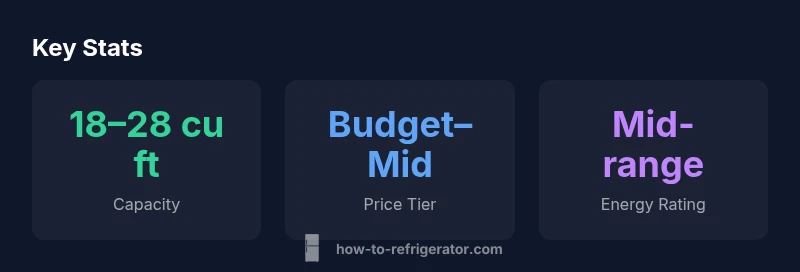
Hisense refrigerators offer substantial capacity at a lower upfront cost, making them attractive for price-sensitive buyers. Reliability can be model-dependent, so choose a model with solid service coverage and a favorable warranty. Overall, they’re a solid mid-range option when you prioritize value over premium materials.
FAQ
Are Hisense refrigerators reliable long-term?
Reliability varies by model and production year. Read recent owner reviews, check local service coverage, and compare warranty terms to gauge long-term performance. A model with widely documented parts availability generally offers better upkeep.
Reliability depends on the model—look at owner reviews and service coverage to make a good choice.
Do Hisense fridges energy-use compete with premium brands?
Yes, in many cases Hisense sits in the mid-range for energy efficiency. For households aiming to minimize running costs, compare model-by-model energy guides and look for eco-friendly features like adaptive defrost and temperature optimization.
They’re usually mid-range in energy use; compare specific models for the best efficiency.
What configurations are most common in Hisense refrigerators?
Hisense offers top-freezer, bottom-freezer, French-door, and side-by-side designs. Choose based on kitchen layout, door swing space, and storage needs. Mid-range models typically balance capacity with practical features like adjustable shelves.
Common configs include French-door and top-freezer; pick what fits your kitchen best.
Is the warranty good enough for a long-term purchase?
Warranty terms vary by model and region. Compare duration and what is covered, especially for sealed system components. Consider purchasing extended warranty if you expect heavy use or if local service latency is a concern.
Check the exact warranty in your region and model; extended coverage can be worth it.
How should I compare Hisense to other brands?
Create a simple scorecard covering price, capacity, energy use, and service options. Read independent reviews for reliability signals and weigh personal needs against price-to-feature trade-offs.
Use a quick scorecard across price, capacity, energy, and service to compare brands.
Top Takeaways
- Identify your space and capacity needs before choosing a model
- Compare warranty terms and local service options for peace of mind
- Expect solid value, but verify reliability signals for the specific model
- Prioritize energy features that fit your usage pattern
- Check interior layout to ensure shelves and bins meet your needs